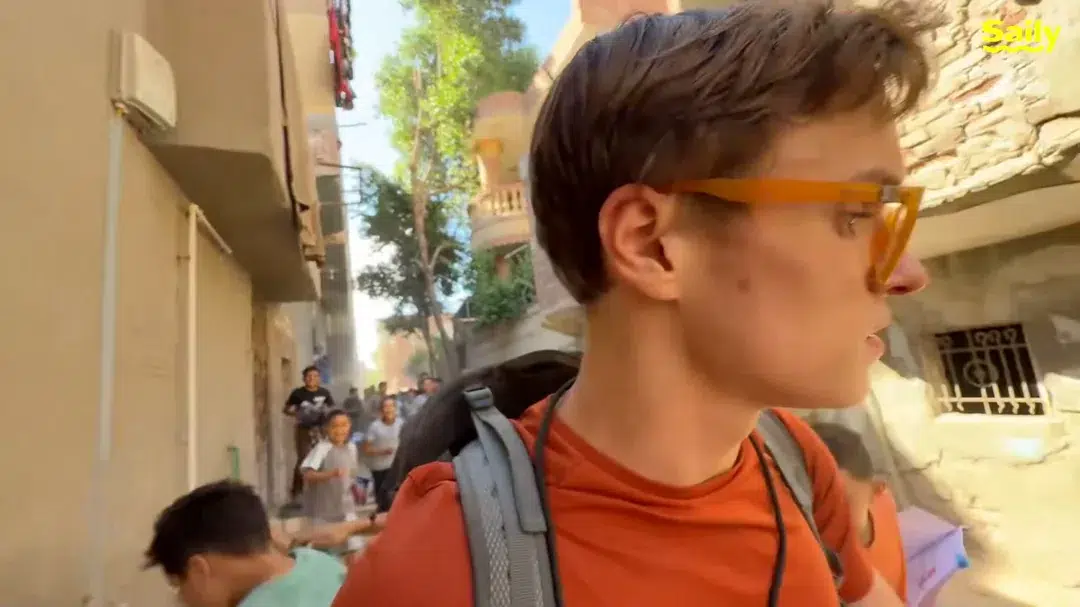
Videos of German streamer Benjamool being chased and having stones thrown at him by kids in Cairo have been circulating online, with security authorities reportedly looking into the incident.
The footage has largely been shared as the story of a German visitor being attacked while walking through Cairo. That is part of what happened, but there is more context to Benjamool’s trip and the type of content he was producing at the time.
Benjamool is an IRL streamer. IRL stands for “in real life,” a form of livestreaming where creators broadcast themselves outside their homes while travelling, walking through cities, eating, meeting people or simply documenting what happens around them in real time.
The format covers everything from ordinary travel streams to much more confrontational content. Some IRL creators have built large audiences by entering unfamiliar environments, approaching strangers and remaining in situations as they become uncomfortable or unpredictable. In the more extreme cases, provoking reactions can become part of the entertainment.
One of the best-known examples is American streamer Johnny Somali, whose streams in Japan and South Korea became notorious for disruptive and offensive behaviour in public. His activities eventually led to arrests, platform bans and legal action in South Korea.
Benjamool’s content is not comparable to Somali’s in scale or behaviour, but his own description of his streaming style is relevant. On his website, he says he enjoys putting himself into situations without knowing what will happen next, with unpredictability being part of what attracts him to IRL streaming.
His Cairo trip followed that format. According to reports about his streams, Benjamool was attempting to walk around 200 kilometres through Cairo over five days, after initially streaming around the city’s food and nightlife. The challenge involved spending long periods walking through different areas of Cairo while broadcasting continuously.
The stone-throwing incident was also not the first confrontation during the trip.
In an earlier video, Benjamool said he had been repeatedly warned not to continue further while more people began gathering around him. He continued walking until a local man who spoke English eventually helped him leave in a car.
Another crowd later gathered around the vehicle. Benjamool changed transportation and continued in a tuk-tuk before eventually going to a police station. According to his own posts, officers questioned him and later helped transport him away from the area.
The following day, he returned to the same area and continued streaming. A large group of kids began following him before stones were thrown in his direction and he sought somewhere safe.
The attack itself is not something that needs to be justified or explained away. Throwing stones at someone is unacceptable, regardless of what type of content they are producing.
The bigger problem here is that Egypt already has enough very real tourism problems without giving this kind of content more material to work with. Tourists in Egypt do report harassment, aggressive solicitation, scams and other forms of mistreatment, particularly in heavily visited areas, and these are issues that tourism authorities and law enforcement have a responsibility to address.
Harassment, aggressive solicitation, scams and poor treatment of visitors are not invented issues, and when they are not dealt with properly, they create exactly the kind of environment where a streamer who builds content around unpredictability and escalation can easily walk away with footage that confirms whatever his audience already expects to see.
That does not mean Benjamool fabricated what happened, and it does not excuse the kids who threw stones at him. But it also should not mean that every confrontation he records is automatically treated as proof of how Egyptians behave simply because the person behind the camera is a white European visitor.
If the regular problems in Egypt’s tourism sector were handled more seriously and consistently, there would be far less room for this kind of content to define the country in the first place. And when someone deliberately builds a platform around staying in situations until something happens, the answer should not be to ignore that context just because the resulting footage makes him look like the obvious victim.