
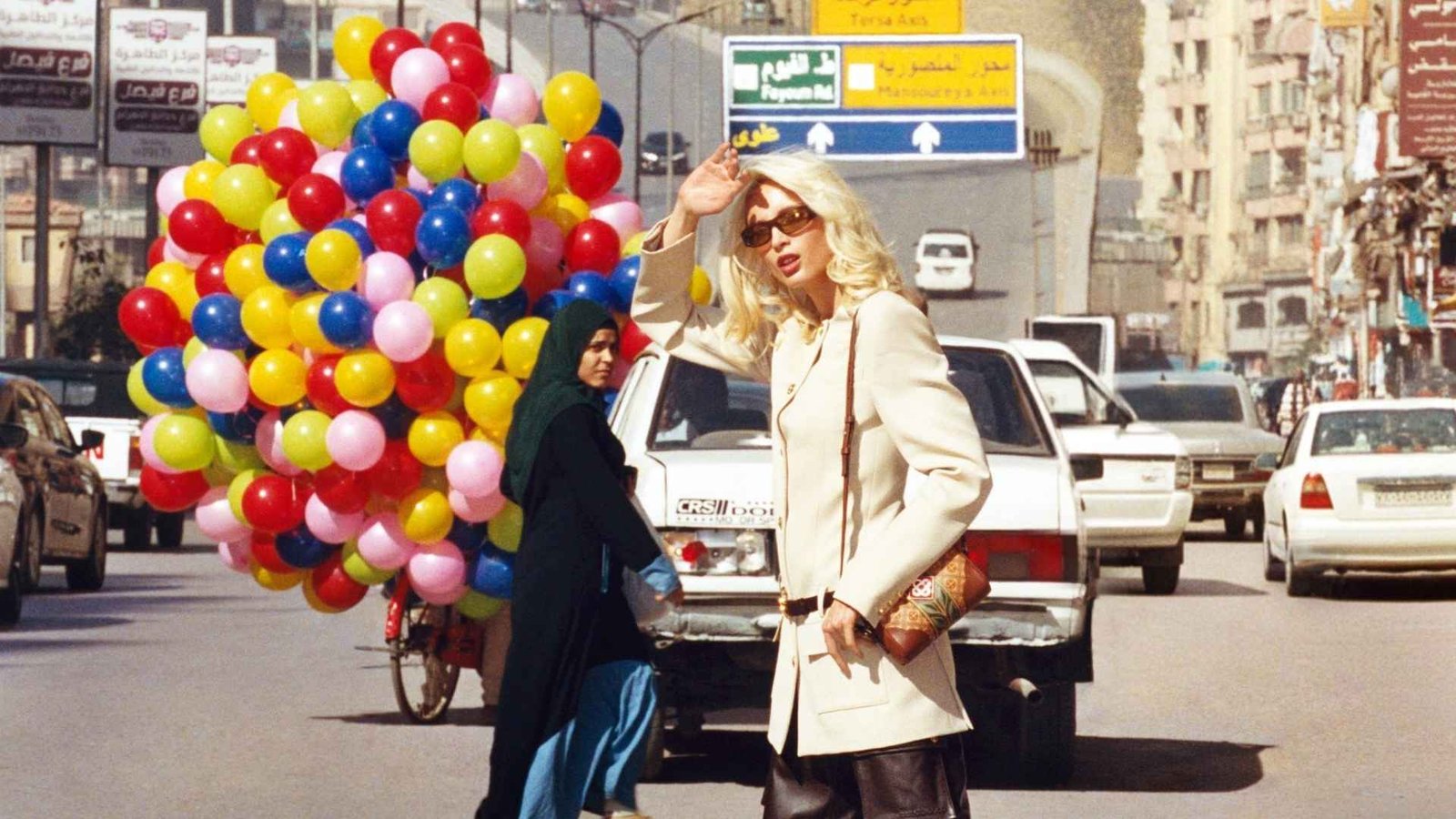
Casablanca’s latest campaign does not simply use Cairo as a location. It turns the city and its people into supporting characters for a version of beauty, class, and freedom that European luxury already considers acceptable.
I’m usually happy when an international fashion house shoots in Cairo. I want to see the city photographed beyond pyramids and postcards. I want Egyptian locations, crews, photographers, stylists, and producers to receive international recognition.
But this Casablanca editorial shoot genuinely irritated me.
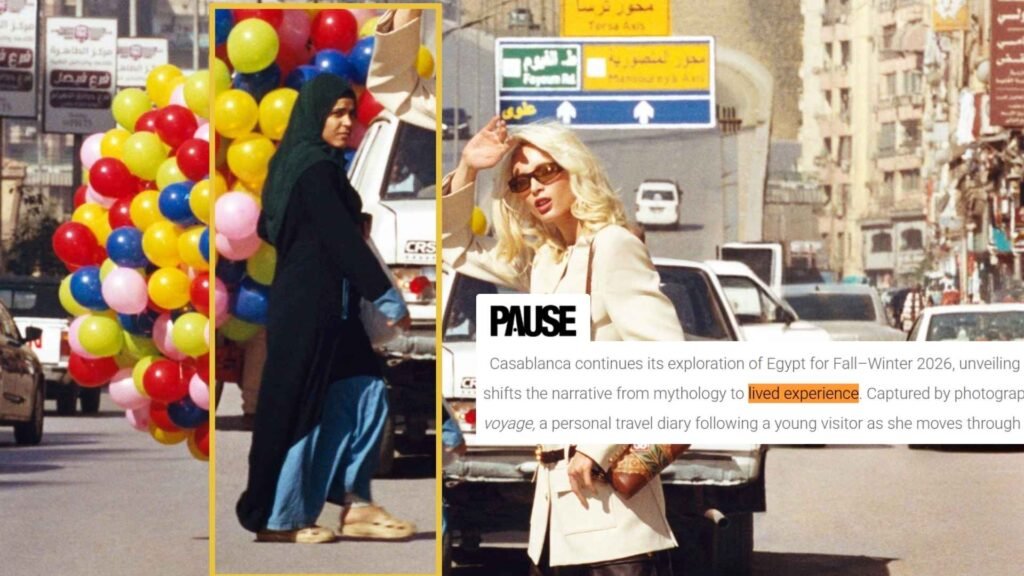
A blonde white model walks through a Cairo street in carefully styled clothes. Behind her, an Egyptian woman in a hijab appears to look in her direction. The balloons, traffic, buildings, Arabic signs, and pyramid complete the scene.
Mind you, the full campaign features several models of different ethnicities. Yet out of all those photographs, Casablanca chose this one, with a white model at the center and an ordinary Egyptian woman behind her, as the campaign’s main press image.
PAUSE Magazine describes the campaign as a journey through Cairo’s “lived experience.”
Um… I’m sorry, but whose lived experience are we actually seeing?
The composition encourages us to imagine that the Egyptian woman is watching this glamorous foreign woman pass through her ordinary, oppressed life.
The white model gets to be the main character. The Egyptian woman becomes a prop supporting the image of the rich, glamorous visitor. Her gaze suggests distance, oppression, and perhaps even envy.
Because, of course, Arab women must always be presented as oppressed by their own lives and fascinated by the freedom of white women.
Her expression becomes part of the styling. Her hijab becomes a symbol. Her perceived difference from the model creates the image’s contrast.
The model is fashionable, mobile, modern, and free. The Egyptian woman is covered, anonymous, ordinary, and stationary. One woman travels through Cairo. The other belongs to the scenery.
This is not representation; it’s racial hierarchy.
Before anyone misunderstands the argument, we have absolutely nothing against the models involved in this campaign. They are all extremely talented and doing the jobs they were hired to do. Models do not necessarily choose the campaign concept, locations, or the narrative created through the edit.
The responsibility lies with the creative direction, the brand, and the people who selected these particular images to tell this particular story.
This is also not an argument that white models should not work in Egypt. The problem is not that a white woman was photographed in Cairo. The problem is what everyone around her was made to represent.
Now, if you don’t know what Casablanca is, don’t worry. You are not missing out on much.
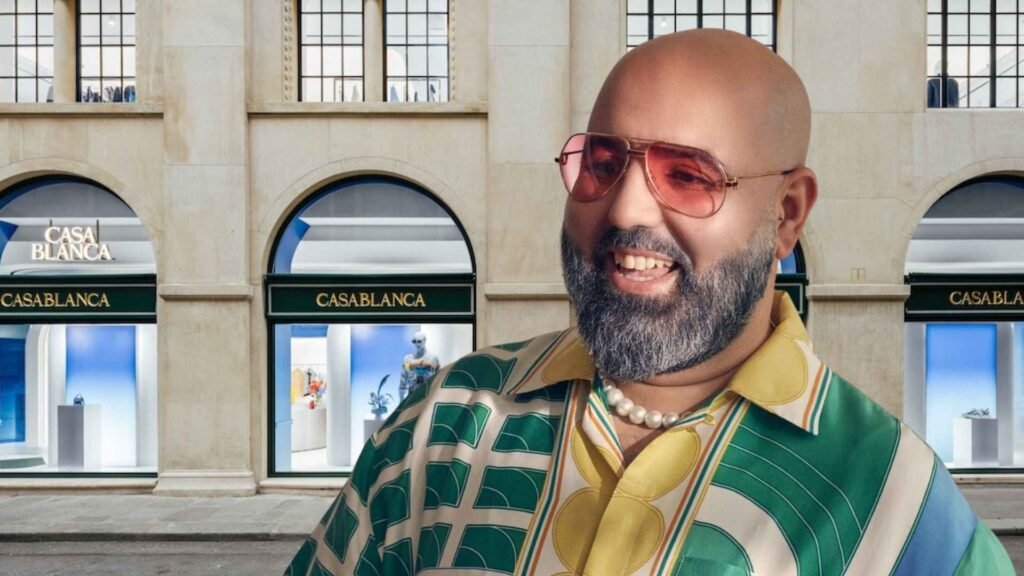
Casablanca is a French luxury fashion house founded in 2018 by Charaf Tajer, a Paris-born designer of Moroccan heritage. It began as a menswear label and later expanded into womenswear, accessories, and other categories.
The brand builds much of its identity around “North African imagery,” travel, and what it calls “old-world elegance,” which makes this campaign especially disappointing.
All I can see is that North Africa supplies the fantasy, while Europe supplies the approval.
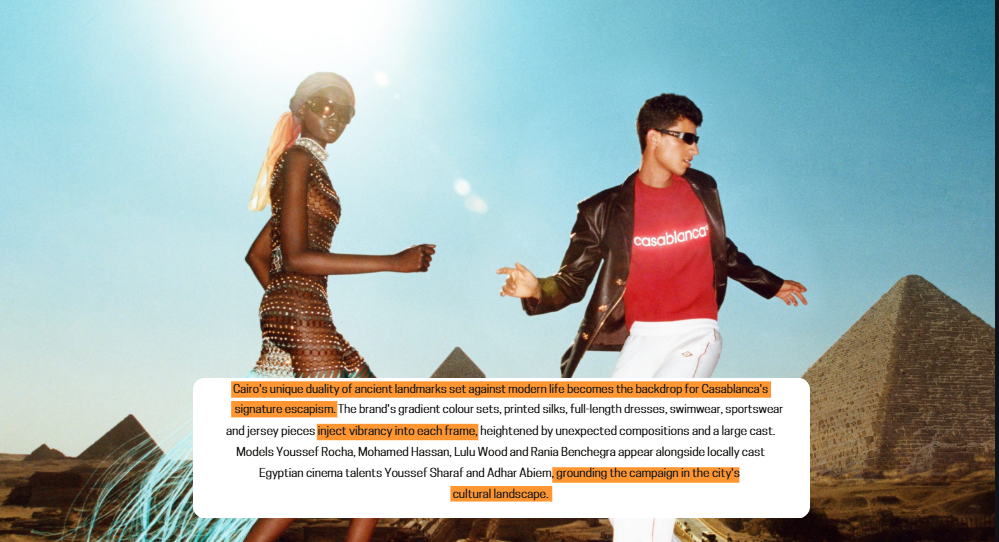
The campaign’s publicity makes that dynamic even clearer. PAUSE’s write-up says:
“Cairo’s unique duality of ancient landmarks set against modern life becomes the backdrop for Casablanca’s signature escapism.”
That sentence almost admits the entire problem. We’re only a backdrop here.
The description then says the clothes “inject vibrancy” into each photograph, as though Cairo, one of the most visually overwhelming cities in the world, needed a European luxury house to bring it color.
It goes on to say that the locally cast talent helps “ground” the campaign in Cairo’s cultural landscape.
Looking at the full campaign does not make the lead photograph feel less exploitative. It reveals a wider hierarchy.
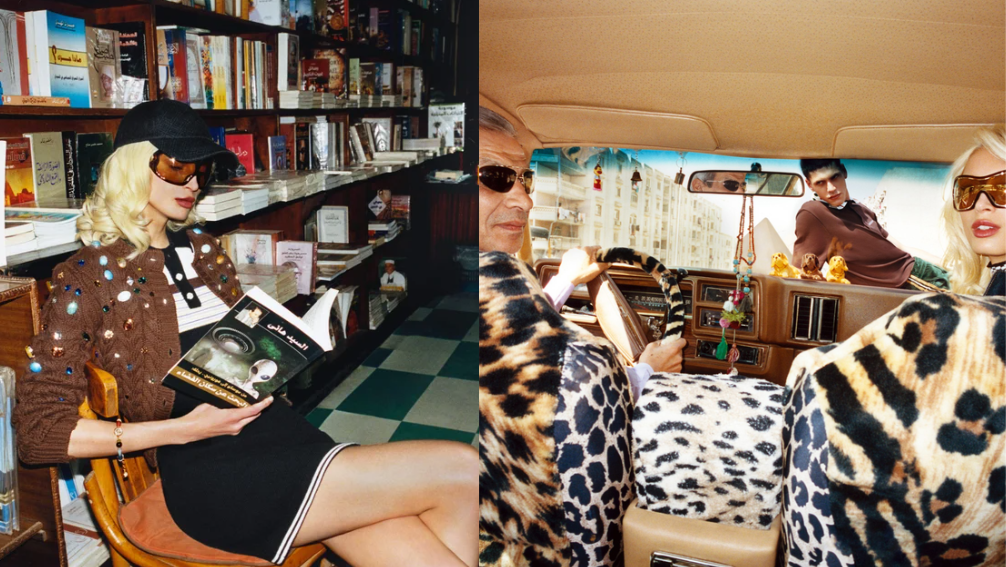
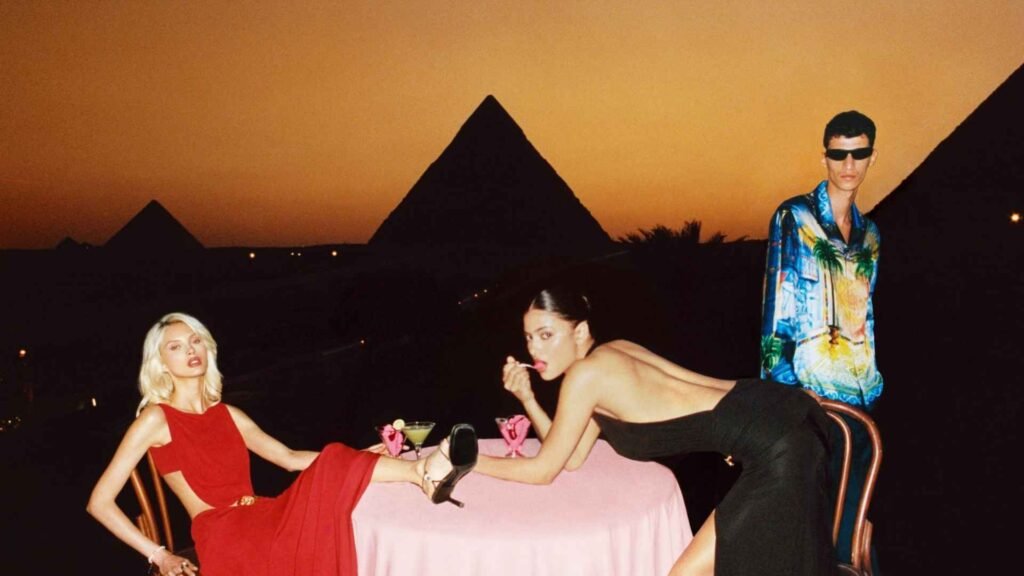
The blonde model is given the clearest identity and journey. She reads in a bookstore, sits in the passenger seat of a dramatically decorated car, walks confidently through Cairo, and poses elegantly in front of the pyramids. Even when she is sexualized, she is still given status, movement, leisure, and narrative variety.
The brunette model is more frequently placed in explicitly sexual poses. She also receives strong, confident portraits, so sexuality is not her only role. But it is undeniably a more aggressive part of how the campaign presents her.
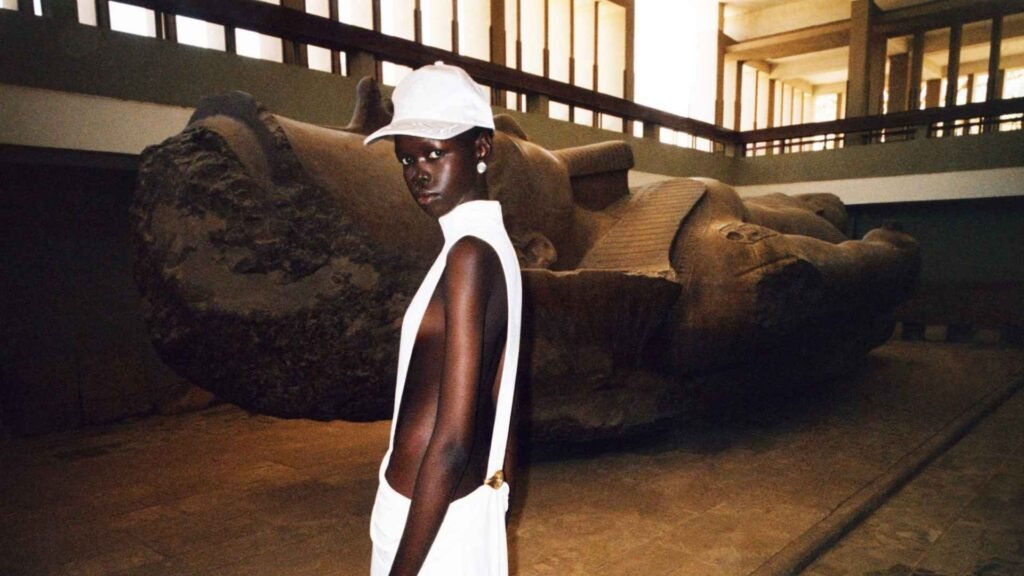
The visual treatment of the Black model raises different questions. She’s the only woman in the shoot who isn’t given glamour poses and seems sad overall.
Some people will call this nitpicking. But visual hierarchies are rarely created through one openly racist image; they are built through patterns. Who receives glamour, who receives sadness, who is allowed dignity, who is sexualized, and who is repeatedly positioned as less important.
Children absorb these patterns before they have the language to explain them. They learn who gets to be the glamorous main character and who is expected to remain quiet, damaged, or grateful to be included.
But the hierarchy is not simply white versus nonwhite. It is between those European luxury considers aspirational and those it considers useful for atmosphere.
Arab and African models can be centered once they have passed through the European fashion system. They must have the bodies, features, styling, presentation, and international careers that Europe already recognizes as luxury.
Meanwhile, the ordinary Egyptian woman in a hijab is not granted that transformation. She remains unstyled, unnamed, and firmly attached to the street. Her role is to represent the “real Cairo” that the internationally acceptable models get to experience.
There is a self-hating impulse within some Arab creative circles that we need to discuss. The desperation to receive European validation, even when the price is presenting our own people as inferior.
That does not necessarily mean everyone involved literally hates being Arab. It means the work still presents European approval as the ultimate measure of beauty and success. We keep offering Europe the poor, traditional, oppressed, and anonymous version of us it already expects to see, then celebrate when it calls the result “authentic.”
Egyptian creatives reproduce the same formula. We place a polished, usually light-skinned, model in a working-class neighborhood, surround them with ordinary people, and wait for someone to stare. Vendors, workers, children, women in hijab, and men sitting outside shops become instant production design.
If international recognition requires us to exoticize or reduce our own people, then it is not representation. It is submission dressed up as creative ambition.
The Casablanca campaign repeats this formula more than once. In another photograph, a seated Egyptian woman in a hijab watches a styled couple embrace. Elsewhere, Egyptians appear as café musicians, shisha smokers, a driver, a bookstore owner, and an older passenger sitting between fashion models.
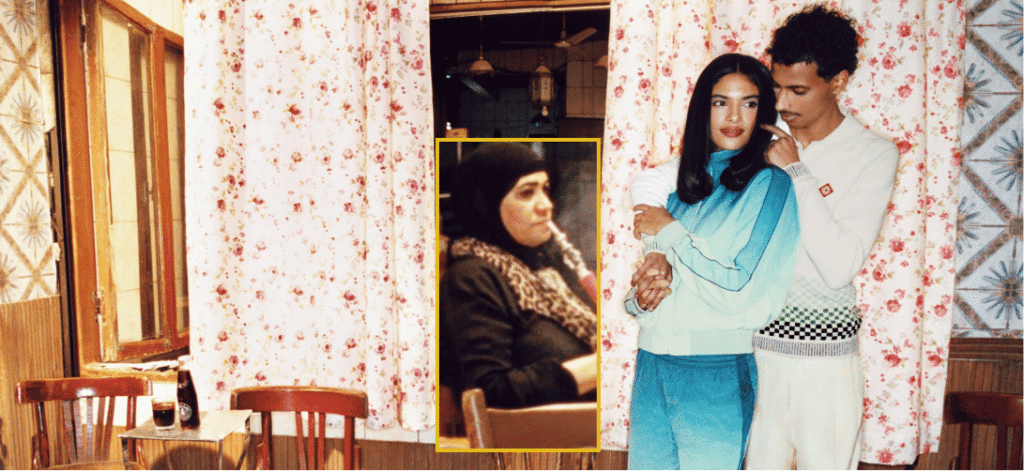
They are not the people through whom the campaign experiences Cairo. They are part of the Cairo being experienced.
The models are the story. Egyptians are what make the story look authentically Egyptian.
We were so happy that international fashion wanted Cairo as a backdrop that we never asked why ordinary Egyptians always had to remain in the background. And now we are reproducing that fantasy ourselves.
It needs to stop.
Photograph Cairo. Love Cairo. Build entire campaigns around Cairo. Work with Egyptian crews and tell stories in our streets. But do not use an ordinary Egyptian woman’s face to make your model appear freer.
Do not use working-class people to make luxury look more luxurious. Do not turn someone’s clothes, labor, neighborhood, or possible hardship into aesthetic contrast.
Ordinary people do not stop being people because they make your frame more interesting.
Cairo is not merely a set. Egyptians are not props. And a woman trying to exist in her own city does not owe anyone a performance of oppression.


