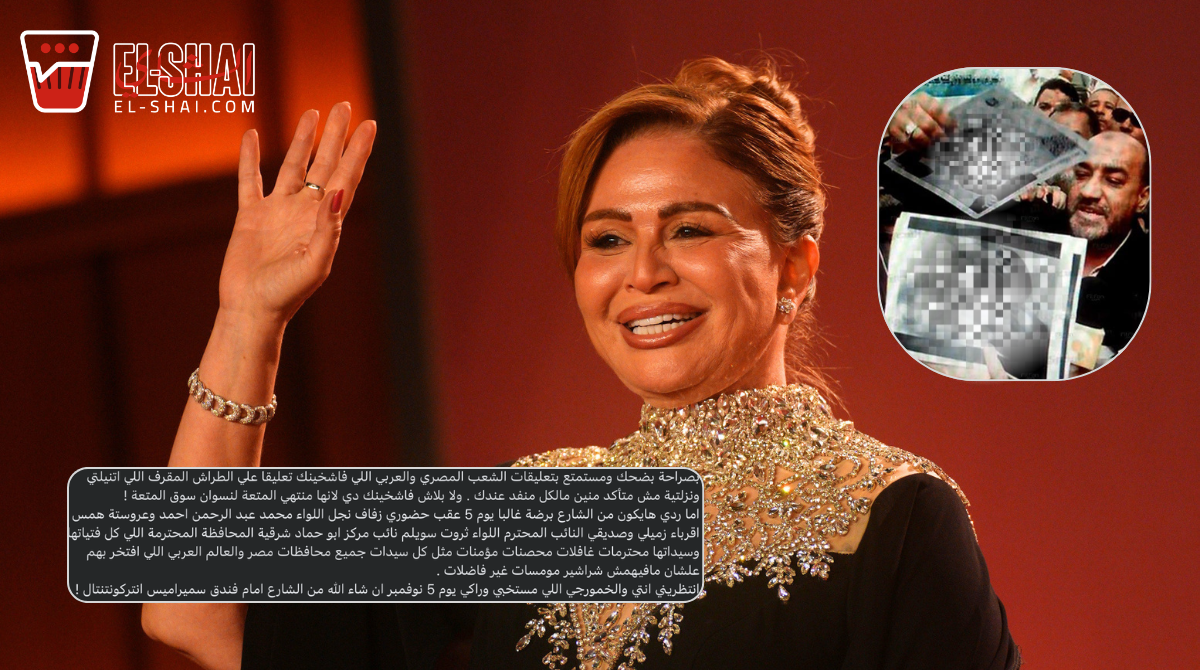
For more than a decade, Elham Shahin has been accused of offending religion, undermining morality, and provoking controversy. Some statements were genuine. Others were taken out of context or falsely attributed to her. We revisited 14 years of controversies to ask why disagreement with an actress so often becomes an attack on her dignity.
By now, the pattern feels predictable. Shahin says something, an old interview resurfaces, or a photograph circulates, and suddenly everyone has an opinion. The outrage might concern religion, politics, her clothes, or an acting role. Sometimes, the alleged statement cannot even be traced to her.
Her latest confrontation with former Zamalek president Mortada Mansour is another chapter in a dispute that has followed her for years. But what has Shahin actually done? How much of what people believe is true? And why do reactions so often shift from criticizing her views to attacking her character?
Shahin believes politically motivated accounts and paid online campaigns are damaging her reputation. That allegation requires evidence beyond her testimony. But the documented history of attacks is troubling enough on its own.
The Case That Started With Criticism and Ended With Fabricated Photographs
In 2012, amid Egypt’s political and religious polarization, Shahin’s opposition to Islamist political movements drew criticism. Opposing political Islam is not the same as opposing Islam, a distinction some of her critics appeared unwilling to make.
Television preacher Abdullah Badr used his Al-Hafez program to attack her personally, invoking scenes from her films to question her morality and sexual conduct. Shahin took him to court.
Badr’s attacks went far beyond criticizing Shahin’s political views. In one televised tirade, he accused her of spending 30 years teaching Egyptian girls to undress and behave immorally through her films. He mocked her age, described her work as indecent, and demanded to know how many men had kissed, embraced, or “mounted her” in her acting roles.
He then questioned how someone with her career could dare criticize Islamists or discuss religious extremism.
In his opinion, Shahin’s work as an actress supposedly disqualified her from having an opinion about religion or politics. Rather than challenging her arguments, Badr used her profession and sexuality to undermine her right to speak at all.
In December 2012, a misdemeanor court sentenced Badr to one year in prison and imposed a fine for defamation. The published court reasoning described attacks on her honor and reputation, not merely criticism of her work.
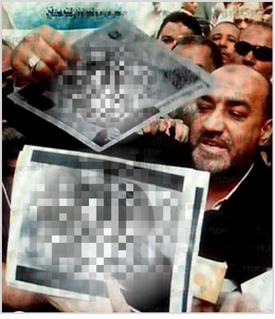
The dispute became uglier when fabricated sexually explicit photographs purporting to show Shahin were distributed outside the courthouse. Badr told investigators he had received the images from someone else and believed they were real. They were not.
In June 2013, a separate court sentenced him to five years over the images and further defamation. In September 2014, an appeals court reduced that sentence to six months in prison and an EGP 10,000 fine.
When Someone Else Started Speaking in Her Name
In May 2013, Shahin’s lawyer filed a complaint about a Twitter account allegedly impersonating her and publishing political statements that some websites reportedly repeated as genuine.
Days later, her lawyer sought police protection after Badr supporters reportedly called for a demonstration outside her home. The complaint documents the threat, not that a demonstration actually took place.
In June 2014, another complaint concerned a Facebook account allegedly publishing statements in her name. The available reporting does not establish who operated these accounts or whether they were connected. It does show how easily someone else’s words could become another Shahin controversy.
The Controversies Over Things She Actually Said
Not everything attributed to Shahin was fabricated. She has made statements that genuinely offended people, and her responses can be provocative or dismissive. Those statements deserve scrutiny, but in context.
The Play Attacked Before It Was Performed
In 2021, Shahin expressed interest in staging Jean-Paul Sartre’s The Respectful Prostitute. The reaction was immediate. Much of the outrage appeared to rest on the title, with critics treating it as though Shahin intended to stage sexual acts rather than perform a recognized work of theater.
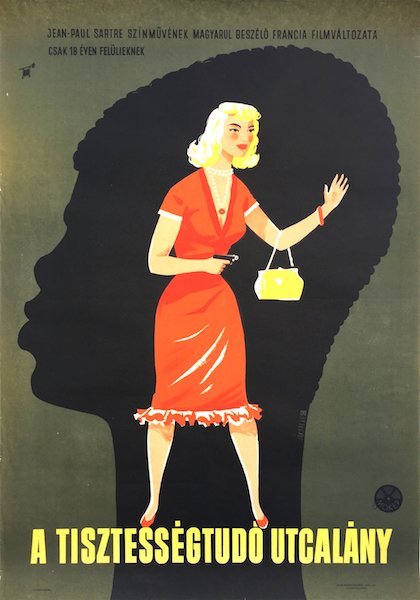
For those unfamiliar with it, Sartre’s 1946 play follows a white sex worker in the American South who witnesses a white man kill a Black man. Powerful men pressure her to falsely accuse another innocent Black man of sexual assault to protect the killer. It is a story about racism, corruption, and moral hypocrisy.
Ironically, the play Shahin was attacked for wanting to perform questions why society condemns a woman for her profession while excusing powerful men who manipulate justice.
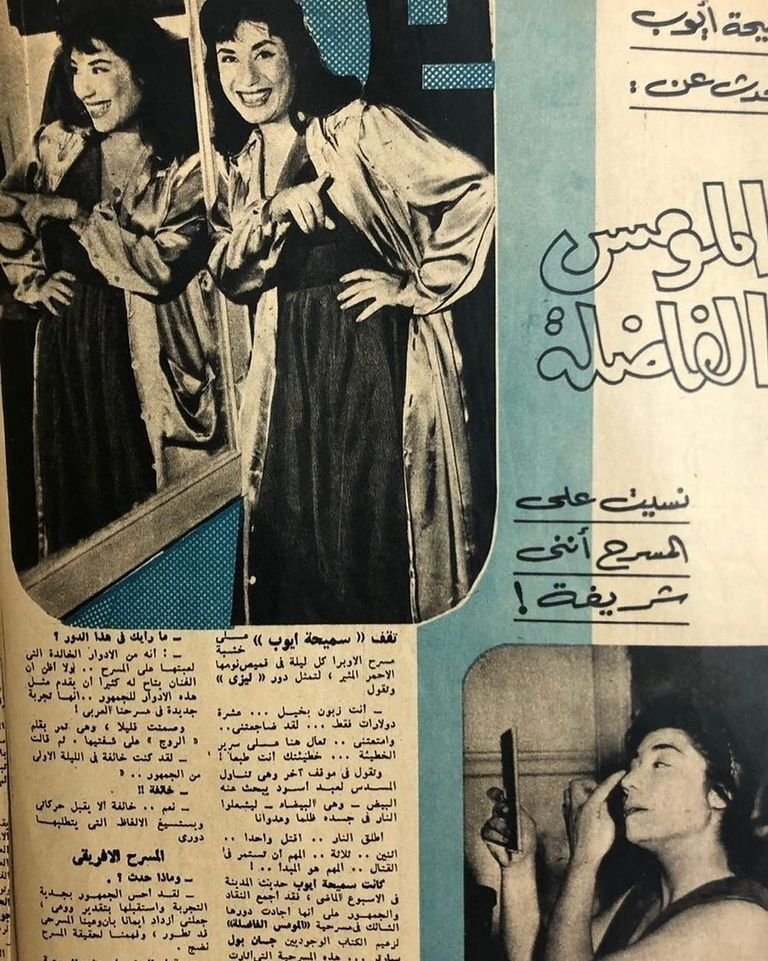
Egyptian actress Samiha Ayoub had performed the work decades earlier. Shahin repeatedly pointed that out, yet the proposed new production was never staged. When the dispute resurfaced in October 2026, she called critics who had not read it ignorant and foolish. That was hardly diplomatic. But judging an actress’s morality by a play’s title without understanding its content was hardly informed criticism.
The Organ Donation Debate
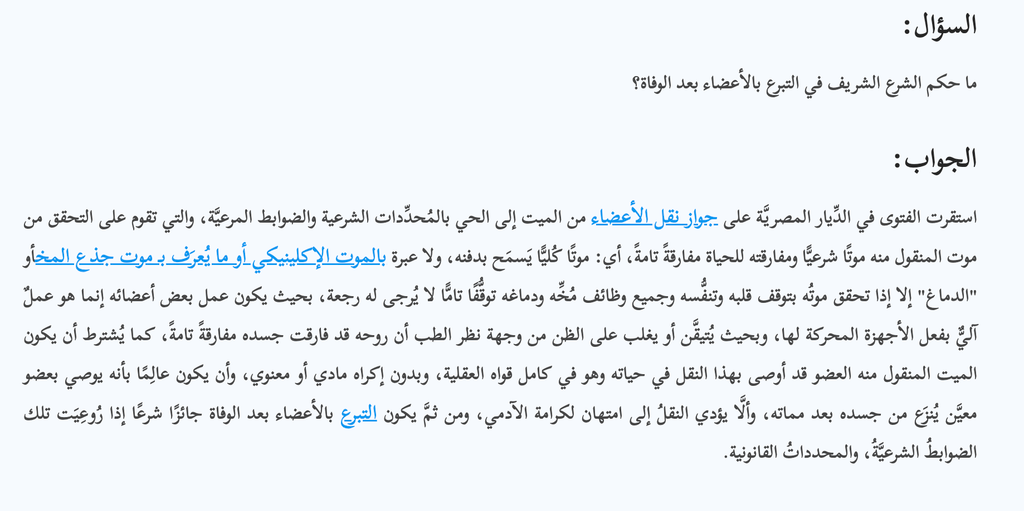
Also in 2021, Shahin said she wanted to donate her organs after death and advocated a clearer way for Egyptians to register their wishes. Some objected on religious grounds; others supported her.
Organ donation raises legitimate ethical and religious questions. But a personal decision about her own body became another reason to condemn her. Egypt’s official religious authorities do not categorically prohibit it: Dar Al-Ifta reaffirmed in 2025 that posthumous donation can be permissible under specific conditions.
The Prayer Controversy
In August 2024, an old interview resurfaced in which Shahin criticized a director for stopping filming so crew members could pray together. She argued that individuals should pray without interrupting everyone else’s work. When challenged, she stood by her position, telling Cairo24 that work should take priority over stopping production for communal prayer.
It’s fair to think she was overreacting. Is briefly pausing production for prayer really such an unreasonable inconvenience? But disagreeing with her about workplace arrangements is not the same as proving she hates religion or opposes prayer itself.
The interview was already around two years old when it went viral. We do not know who revived it or whether its renewed circulation was coordinated. What we do know is that an argument about how a film set should operate became another judgment on her faith.
Her Criticism of Sheikh El-Shaarawy
In January 2023, Shahin opposed a proposed drama about the late preacher Sheikh Mohamed Metwally El-Shaarawy. Confronted with an older clip praising him, she explained that she had watched more of his sermons and changed her mind. Since when is reconsidering an opinion after learning more something to apologize for?
El-Shaarawy was a cultural phenomenon whose television appearances brought religious commentary into millions of Egyptian homes. But popularity is not infallibility, and treating a preacher almost like a prophet puts his teachings beyond the scrutiny they deserve.
His recorded or published positions included defending a husband’s right to discipline his wife, opposing organ donation physically, and interpretations requiring non-Muslims to demonstrate subordinate status. There were several accounts of his views also describe support for a form of female genital cutting. He acknowledged prostrating in gratitude after Egypt’s devastating 1967 defeat because he feared victory would strengthen communism.
These positions raise serious questions about women’s rights, bodily autonomy, and religious equality. Some conflict with positions subsequently adopted by Egyptian religious authorities, including on organ donation and female genital cutting.
El-Shaarawy’s contribution to religious broadcasting can be recognized without placing him beyond criticism. The shame is not that Shahin changed her mind about him. It is that questioning his teachings can still provoke more outrage than some of the harmful ideas he promoted.
When Playing a Character Became Another Reason to Attack Her
In 2022, Shahin appeared in Betloo El Rouh, a drama about ISIS. Before it even aired, promotional images of actresses wearing clothing associated with the group prompted accusations that the production insulted Islam.
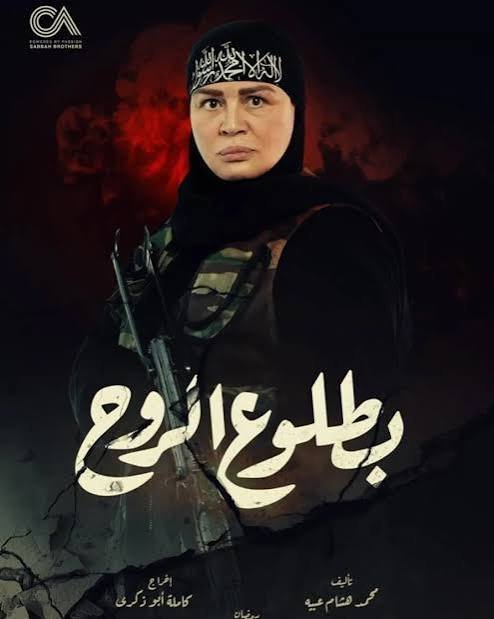
Shahin pointed out that the show criticized ISIS, not Islam. Writer Mohamed Hesham Obayya also questioned the backlash to a drama people had not yet watched.
Yes, we’re defending ISIS now…
Then Came a Statement She Says She Never Made
In August 2025, posts claimed Shahin wanted her artistic career taught in Egyptian schools. The story drew ridicule, but no reliable original recording establishing the remark emerged in the reporting reviewed. Shahin denied saying it and challenged critics to produce the evidence.
The claim’s origin and the relationships among accounts spreading it remain unverified. Yet the damage is clear: someone who already thinks Shahin is arrogant may believe a headline that confirms that impression. By the time a denial arrives, the judgment has been made.
Why Does It Always Become Personal?
The latest controversy began when former Zamalek president Mortada Mansour criticized actresses’ appearances and clothing at the 2026 El Gouna Film Festival, including Elham Shahin.
Speaking at the Sharm El Sheikh International Youth Theatre Festival on November 1, Shahin appeared to be aiming at Mortada Mansour without mentioning him by name. She criticized his habit of confronting journalists in public and insulting them, particularly his use of offensive remarks involving their mothers. She asked why journalists kept approaching him despite such treatment.
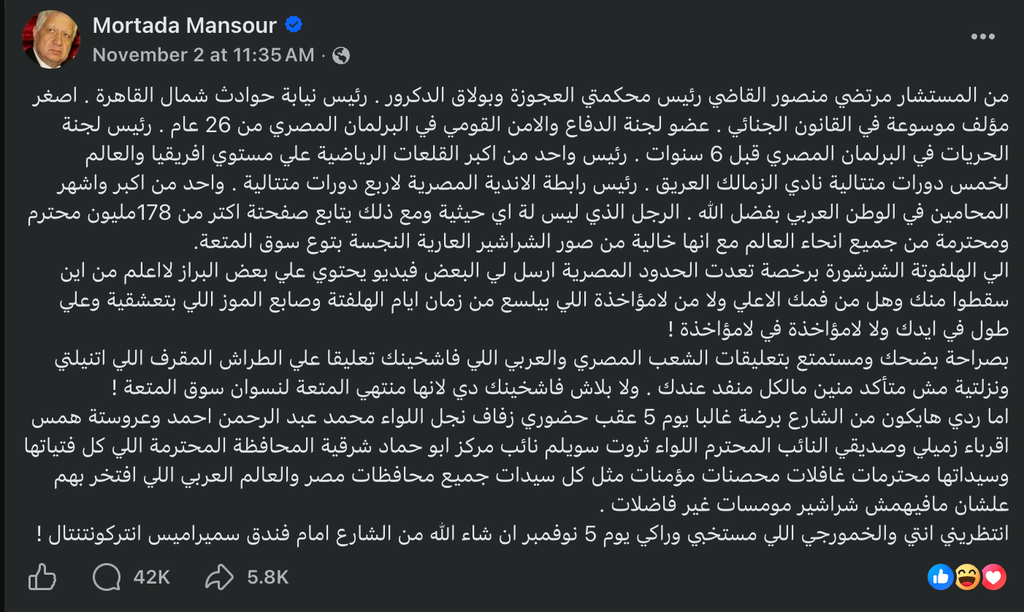
Mansour responded by revisiting Shahin’s previous controversies, including her criticism of Sheikh El-Shaarawy. He also made personal allegations about her life and family, warning her not to provoke him because he claimed to know everything about her.
He subsequently published a lengthy Facebook post emphasizing his former positions and announced plans to respond publicly on November 5 outside Cairo’s Semiramis InterContinental Hotel.
Shahin declined to continue the public argument, instead sharing verses attributed to Imam Al-Shafi’i about remaining silent in the face of insults. She also indicated that she would pursue legal action if necessary.
When Outrage Becomes Content
Shahin has repeatedly alleged that paid online groups fabricate statements and provoke hostility toward artists. She raised the issue at El Gouna Film Festival in October 2026 and again at the Sharm El Sheikh International Youth Theatre Festival in November. Those claims have not established a single paid operation behind the attacks.
But not every attack begins with an anonymous account. Sometimes, entertainment coverage itself turns humiliation into clicks.
At the 2025 El Gouna Film Festival, wind accidentally lifted Shahin’s dress. Footage spread online, and she alleged it had been zoomed in and slowed down to make the moment more revealing.
That December, intrusive photographs of actress Reham Abdel Ghafour at a film screening circulated with offensive comments. Legal complaints followed. Prosecutors later found insufficient evidence of criminal wrongdoing by the photographers, while a separate complaint over the online circulation of an image with an offensive caption proceeded.
An embarrassing frame, an old interview stripped of context, or an unsupported claim can become a scandal when publishers decide it will generate engagement.
At El Gouna in 2026, the Egyptian Actors’ Syndicate, led by Ashraf Zaki, signed an agreement with Meta to improve reporting of harassment, impersonation, manipulated content, and privacy violations. The CUT awareness initiative featured Reham Abdel Ghafour, Mohamed Farrag, and Yasmina El Abd. Complaints would still be reviewed under Meta’s policies, not automatically removed.
The agreement recognized a problem the entertainment industry also needs to confront: the difference between reporting on celebrities and profiting from their humiliation.
Why Is Elham Shahin Such an Easy Target?
Shahin speaks openly about religion, political movements, women’s autonomy, artistic freedom, and public morality. She doesn’t always choose her words carefully, and sometimes her critics are right. But her disagreements repeatedly turn into arguments about what kind of woman she is, rather than whether her position is right.
When you live in a society where feminist is used as a slur, defending women can make you the villain. Refusing to stay quiet makes you an even more visible target.
And Shahin is hardly alone. Shereen Reda, Rania Youssef, and director Inas El Degheidy have also faced hostility over their appearances, opinions, and challenges to conservative expectations. What distinguishes Shahin is not necessarily that she receives more hate, but how consistently she fights back. She challenges religious figures, defends her choices, and rarely retreats quietly.
Perhaps Shahin isn’t uniquely hated. Perhaps she’s simply one of the women least willing to accept that hatred in silence.
Has Anything She Said or Done Justified the Attacks?
Has Shahin said things people could reasonably find offensive? Yes. She can be provocative, dismissive, and sometimes wrong. None of that puts her beyond criticism.
But criticism is not harassment. The fabricated photographs in the Badr case were not a response to her artistic choices. Impersonation complaints, threats, and unsupported claims aren’t legitimate just because someone dislikes her opinions.
We don’t have to agree with Shahin to recognize the difference. In fact, defending someone’s right not to be humiliated or lied about, even when we disagree with them, is a better test of our commitment to public debate.
You can question her arguments, dislike her films, or choose not to follow her career. But when disagreement becomes an excuse for fabrication, intimidation, and attacks on personal dignity, the controversy is no longer simply about Elham Shahin.