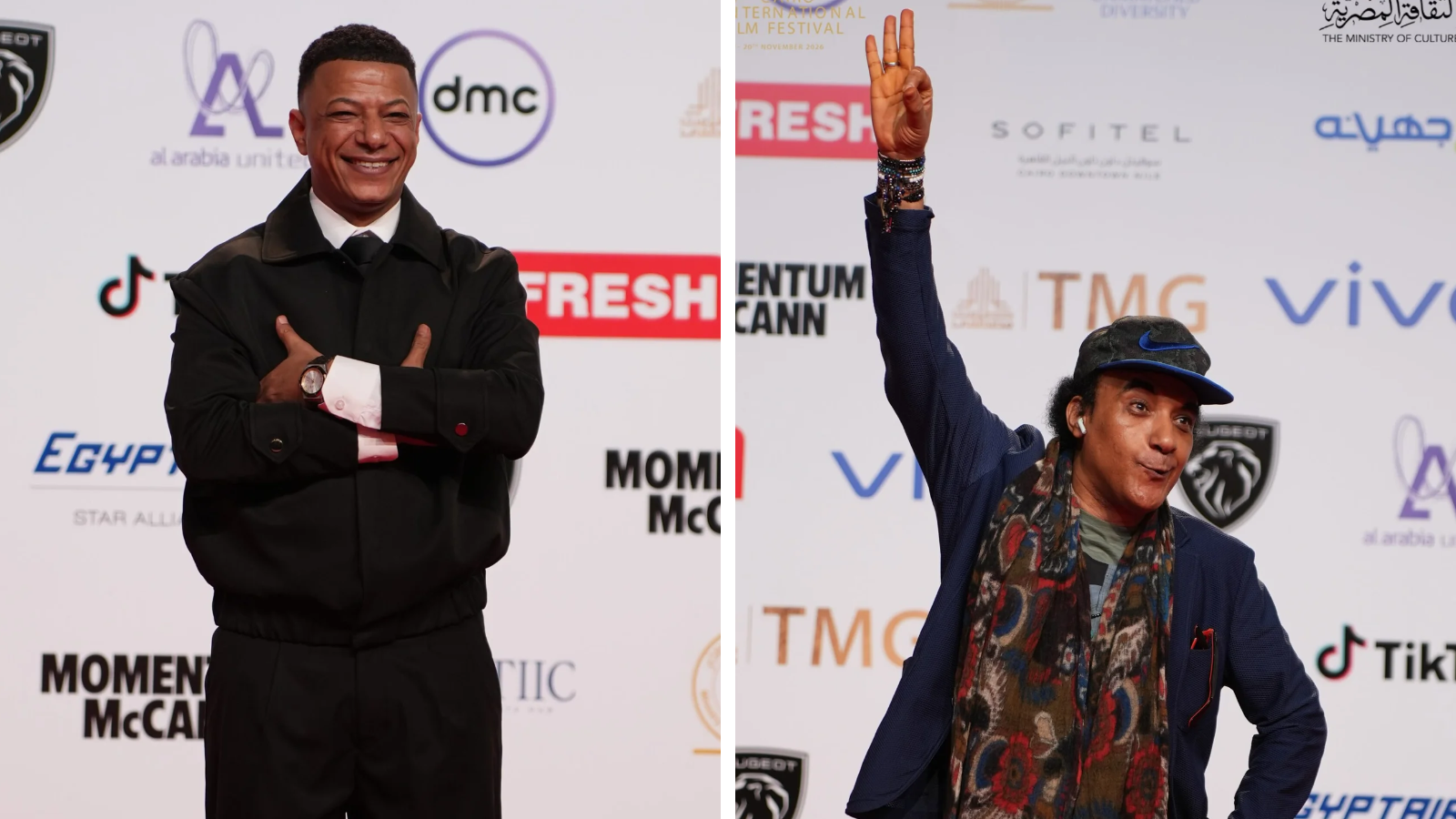
Imagine being so determined to criticize a film festival that you start spreading rumors about how badly it’s failing, claiming organizers have become so desperate for celebrity appearances that they’ve resorted to inviting celebrity lookalikes to walk the red carpet.
That’s exactly the narrative some social media posts have been pushing about this year’s Cairo International Film Festival (CIFF).
Except there’s one rather important detail they conveniently left out: the lookalikes were there because they’re featured in El Shabih, a documentary screening at the festival.
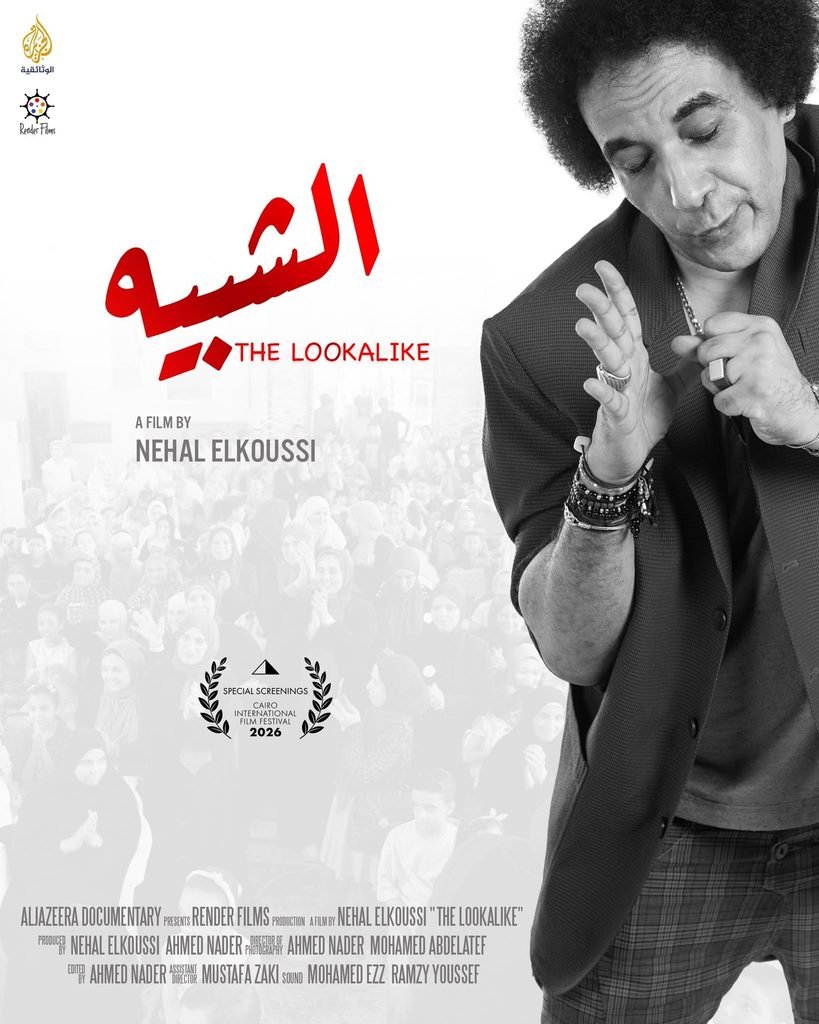
Directed by Nehal El Koussy, the film follows people whose resemblance to famous figures, including Mohamed Mounir, Kylian Mbappé, and Sheikh Mohamed Metwally El Shaarawy, has shaped their lives and identities.
They weren’t invited to compensate for a lack of celebrities. They were there to represent a film they actually appeared in.
At a film festival.
But Since When Did Celebrity Attendance Determine a Film Festival’s Success?
Over the past few years, criticism of Egyptian film festivals has increasingly revolved around the same questions: Where are the celebrities? Why aren’t more famous actors attending? Why does the red carpet look empty? Has the festival lost its relevance?
We’ve seen it with El Gouna Film Festival, and we’re seeing it again with CIFF.
And yes, compared to previous editions, this year’s CIFF has been relatively quiet in terms of celebrity appearances and social media excitement. That’s a fair observation.
But why have we decided that a film festival’s success should be measured by the number of famous people walking its red carpet?
In fact, if anything, we should be questioning why we’ve spent so many years accepting the opposite.
For years, Egyptian film festivals have welcomed celebrities whose presence had little, if anything, to do with the films being screened. Actors, influencers, and public figures would walk the red carpet simply because they were famous, regardless of whether they had a film participating in the festival.
And somehow, that became normal.
We became so accustomed to seeing red carpets filled with celebrities that their absence is now being interpreted as evidence of failure.
But perhaps the problem wasn’t that festivals stopped attracting random celebrities.
Perhaps the problem was that we spent years treating their attendance as the main attraction.
Film Festivals Aren’t Supposed to Be Celebrity Parades
There’s nothing inherently wrong with celebrities attending film festivals. Established actors and filmmakers are part of the industry, and their presence can bring valuable attention to the event.
But there’s a difference between celebrating cinema and organizing a celebrity gathering that happens to have film screenings on the side.
A red carpet should primarily be a space to celebrate the people behind the films being presented: directors, actors, producers, crews, and, in the case of documentaries, the people whose stories are being told.
It shouldn’t require a famous face to justify someone’s presence.
And it certainly shouldn’t be considered embarrassing when the people attending are less recognizable than the celebrities audiences have become accustomed to seeing.
The entire controversy surrounding El Shabih demonstrates how distorted our expectations have become.
We’re looking at people who participated in a documentary, attending the screening of their own film, and somehow turning that into a scandal about the festival’s inability to attract stars.
If anything, their presence makes considerably more sense than that of a celebrity who has no connection to any of the films being screened.
Maybe the Festivals Are Finally Getting Something Right
What’s particularly frustrating about the criticism surrounding this year’s CIFF is that it overlooks something far more relevant: the films themselves.
While social media has been preoccupied with the supposed absence of celebrities, film enthusiasts and critics have been discussing the strength of this year’s selection, with some describing it as one of the best they’ve experienced in recent years.
And isn’t that exactly what we should want from a film festival?
The opportunity to discover international cinema, watch independent productions that might never reach commercial theaters, engage with filmmakers, and experience stories that don’t necessarily fit mainstream expectations.
A festival’s value should come from its programming, the conversations it creates, and the opportunities it provides for cinema and the people who make it.
Not from whether a particular actress attended the opening ceremony or whether someone’s dress caused enough controversy to dominate social media for three days.
This doesn’t mean CIFF is above criticism.
A festival can have excellent programming and still struggle with organization, accessibility, communication, or creating an engaging experience for audiences.
And a quieter red carpet doesn’t automatically mean everything else is working perfectly.
But those are legitimate areas to examine. A shortage of celebrity gossip isn’t.
We Helped Create These Expectations
To be fair, audiences didn’t develop these expectations out of nowhere.
For years, entertainment media, including platforms like ours, have contributed to turning film festivals into celebrity-focused events.
We’ve covered the outfits, the appearances, the relationships, the awkward interactions, and the controversies, often giving them significantly more attention than the films themselves.
And because that’s what consistently generated engagement, it became what audiences expected.
Eventually, the red carpet stopped being a celebration of the films and became the event itself.
So when a festival shifts attention back toward cinema, it can appear less successful simply because it isn’t producing the same kind of viral content.
But a film festival being less entertaining to follow on Instagram doesn’t necessarily mean it’s doing a worse job as a film festival.
Those are two completely different things.
Perhaps We’ve Been Criticizing the Wrong Thing All Along
There’s something particularly telling about the fact that a documentary about celebrity lookalikes has become the subject of a controversy over celebrity attendance.
The people featured in El Shabih were invited because their stories are part of the festival’s programming. Yet their presence was used to suggest that the festival had become desperate for famous faces.
We’ve become so accustomed to prioritizing celebrity culture that even people attending a festival to represent their own film are being judged according to whether they’re famous enough to be there.
CIFF, GFF, and every other film festival should absolutely be criticized when they fall short.
But if we’re going to criticize them, perhaps we should start with the quality of their films, the organization of their screenings, their accessibility to audiences, and the opportunities they create for filmmakers.
Not whether they managed to convince enough celebrities to pose for photographers.
For years, we normalized film festivals inviting people simply because they were famous, even when they had nothing to do with the films.
Now that we’re seeing red carpets where people actually connected to the films are being celebrated, we’re calling it a failure.
Maybe Egyptian film festivals aren’t losing their purpose. Maybe they’re finally returning to it.
And maybe it’s time we adjusted our expectations accordingly.