The deaths of two well-known bikers this week have sparked an outpouring of grief across Egypt’s biking community. Friends, fellow riders, and followers have shared memories, tributes, and condolences. The loss of two young men is undeniably tragic, and our thoughts remain with their families and loved ones.
Yet before the grief even sets in, another conversation has emerged: who was at fault?
Without even questioning the events, the car’s driver was quickly blamed. Endless analyses of lane changes, turn signals, and reaction times followed. Everyone seemed determined to identify a villain.
But by focusing so heavily on assigning blame, many are missing the larger, more uncomfortable reality. Egypt has a major problem with accommodating bikers.
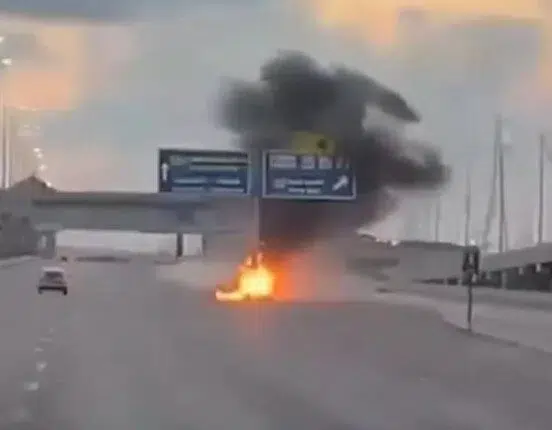
Based on the widely circulated footage, the riders were not simply traveling down the highway. They appeared to be accelerating into a race on a public road. The car involved did not suddenly appear out of nowhere; it was part of normal traffic, and signaled and changed lanes. Whether that maneuver was perfect or not is ultimately beside the point.
Public roads are full of imperfect decisions. Drivers miss exits, change lanes late, and get distracted. Drivers make mistakes.
That is precisely why public roads are not racetracks.
What’s even more disturbing about this incident is the fact that the victims of this accident were biking veterans and respected members of the biker community. Now imagine if a beginner were in this situation?
But the hard reality is that being experienced does not make someone invincible, nor does it make a public highway safe for racing.
If a simple lane change can trigger a chain of events that ends in two fatalities, then the conversation cannot stop at whether the lane change was justified. We must also ask why the margin for error had become so small in the first place.
The reality is that these were not the only lives at risk.
Had either motorcycle struck another vehicle, the outcome could have been far worse. Families driving home, passengers in nearby cars, or completely uninvolved motorists could have been caught in the middle of a disaster they never chose to be part of.
At the same time, dismissing the entire motorcycle community as reckless would be equally unfair.
Egypt has a large and passionate community of riders. Many invest enormous amounts of time and money into their bikes. Many take riding seriously. Many are genuinely skilled. Yet despite the size of this community, opportunities for legal, controlled, high-performance riding remain extremely limited.
That contradiction deserves attention.
If thousands of enthusiasts own machines built for speed and performance, where are they expected to safely develop those skills? Where are the accessible tracks, organized events, and structured environments that allow riders to push their limits without putting the public at risk?
The answer cannot be public highways. Nor can the answer be pretending that the problem does not exist.
The deaths of these two riders should not become another social media argument that disappears within a week. They should force a broader conversation about motorcycle culture, rider responsibility, road safety, and the lack of infrastructure available to one of Egypt’s largest enthusiast communities.
We can mourn those who died and sympathize with their families. But their lives shouldn’t go in vain. We need a change.
A public road is not a racetrack. And until we are willing to say that clearly, tragedies like this will continue to happen.