The timeline filling everyone’s social feeds over the last 48 hours is finally impossible to ignore, forcing a conversation that football authorities have spent months trying to bury. As public details circulate regarding the severe physical and sexual assault “allegations” against national team midfielder Nabil Emad, widely known as Donga, the institutional response has followed a predictable formula.
National team head coach Hossam Hassan finalized the 26-man roster for the 2026 FIFA World Cup, securing Donga’s place on the plane despite an active, unresolved criminal complaint stemming from a Cairo incident.
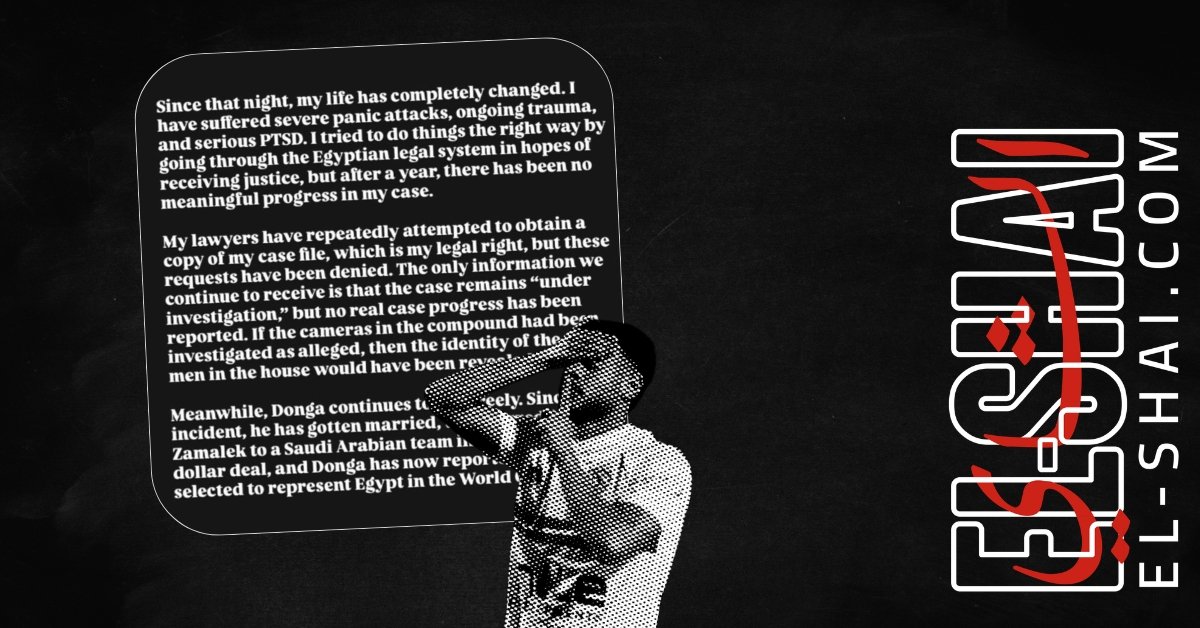
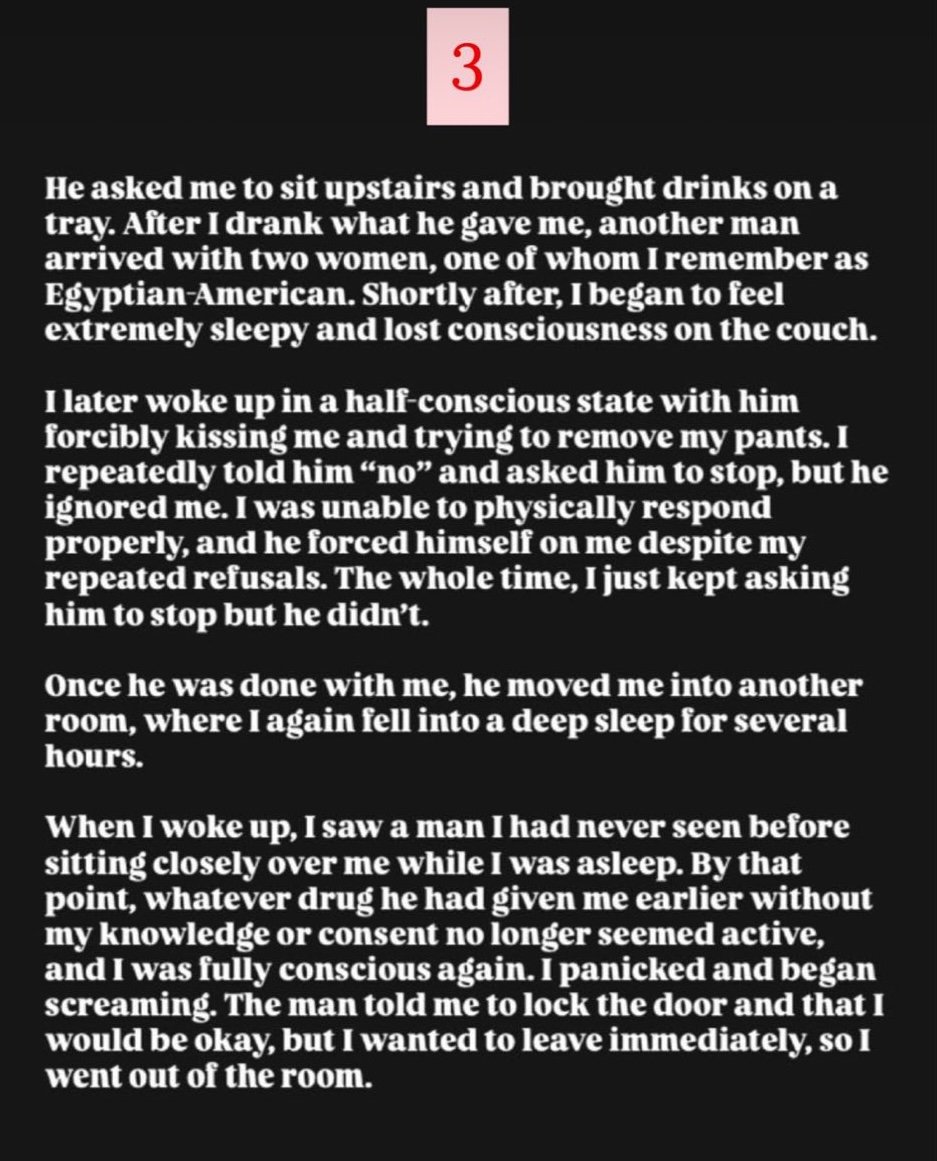
The details breaking across public timelines originated directly from the survivor, an Italian national, who published a detailed chronological account of the event. The survivor stated that the incident took place in Cairo in May, 2025.
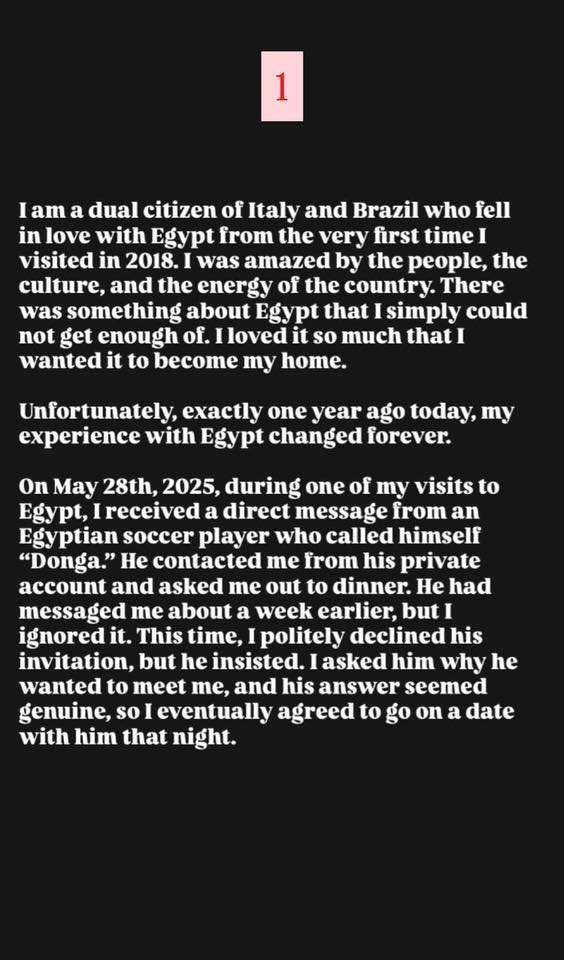
After an initial meeting at a public establishment, the player insisted on moving the gathering to his private residence, bringing several acquaintances along. The complainant alleges she was given a spiked beverage that caused a rapid loss of consciousness.
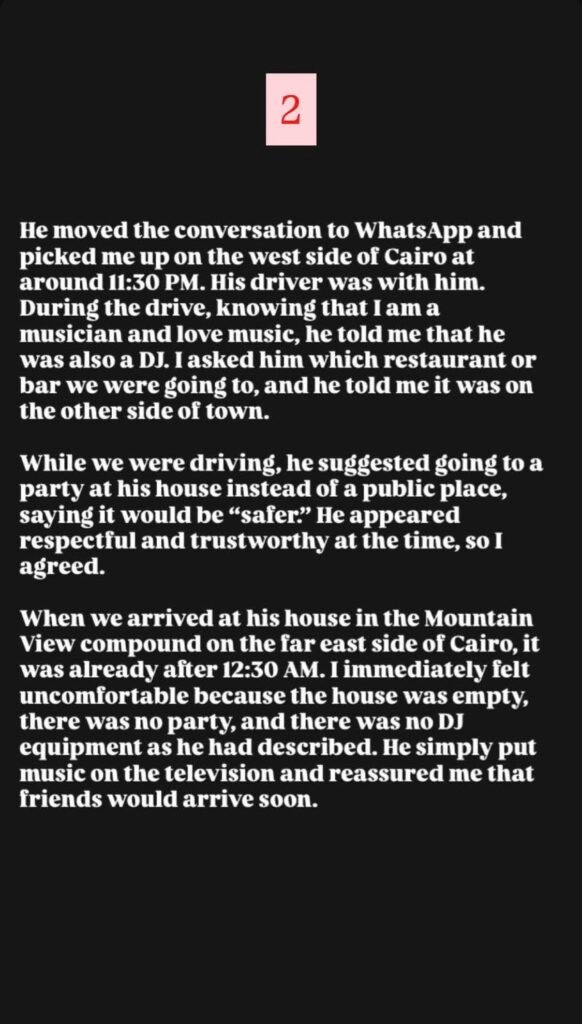
Upon waking up, she attempted to vocally and physically resist the player’s attempts to assault her, but her body remained entirely incapacitated by the substance.
The unfolding situation highlights a complete lack of protective outreach or institutional accountability from sports authorities, creating an environment where corporate scheduling takes precedence over human safety. While the player’s professional trajectory continues completely uninterrupted, public observers have highlighted the compounding institutional isolation faced by the survivor.
Reports indicate that her digital accounts have been consistently targeted and disabled following her disclosures, while no representative from the Egyptian Football Association (EFA), team management, or athletic organizations has attempted to reach out, offer support, or initiate an internal disciplinary review.
The Legal Maneuvers and Predictable Institutional Defenses
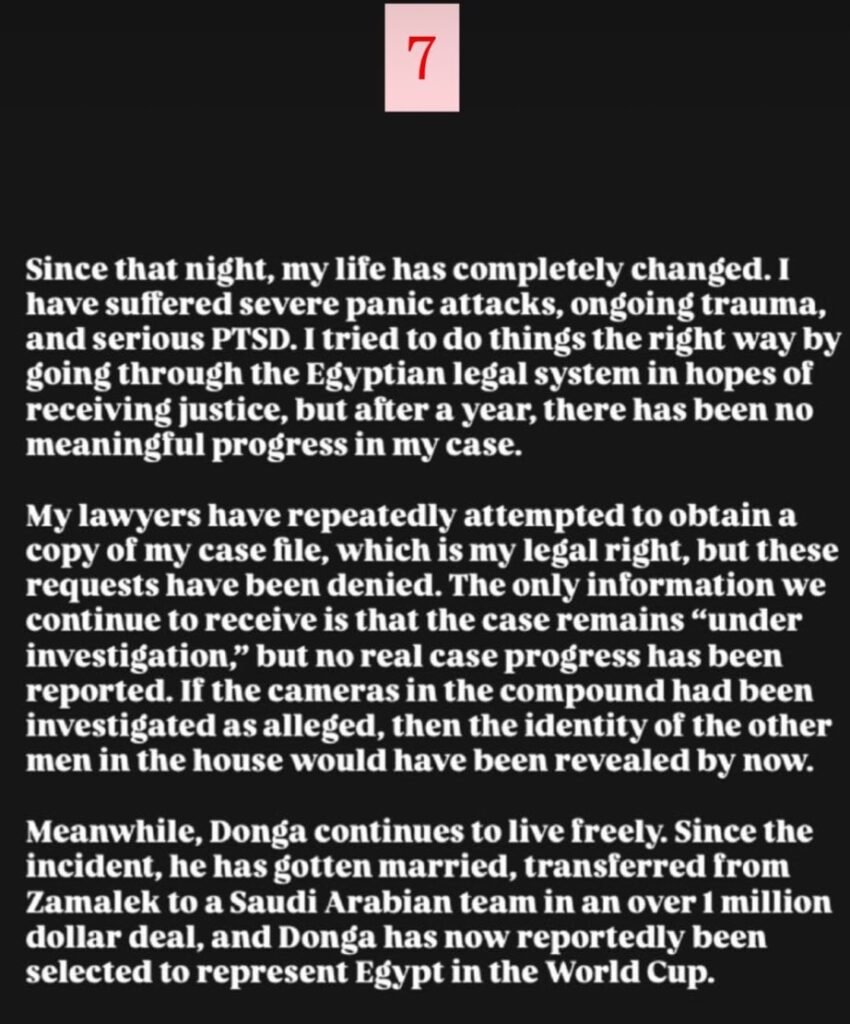
The survivor’s legal representative in Egypt has filed formal motions with investigative authorities demanding that the case, originally opened in July 2025, be actively advanced.
The defense demands include a comprehensive forensic review of all surveillance cameras monitoring the perimeter during the relevant time period, the tracking of transport logs, and the immediate summoning of witnesses and the driver who were present at the premises.
The institutional response from the football community has followed a familiar, highly bureaucratic playbook aimed at shielding the asset, Donga, and forgetting the victims:
National Team Management:
Ibrahim Hassan, the director of the Egyptian national team, addressed the media directly regarding Donga’s roster status. He stated that the technical and administrative staff operate strictly on official judicial status.
Because no formal court conviction or binding legal ruling has been issued against the player by authorities, his athletic eligibility remains completely unaffected.
Defense Legal Counsel:
Shaaban Said, the attorney representing Donga, issued a statement to Cairo 24 categorically denying all claims. The defense characterized the public disclosure as a manufactured smear campaign intended to extort money, asserting that the player had previously rejected financial demands.
Former Club Administration:
Representatives from Zamalek SC distanced the organization from the crisis, stating that during his tenure with the club, the administration never received official judicial notifications, police reports, or institutional complaints regarding the matter.
The Cycle Continues: Systemic Inaction as Standard Protocol
This immediate closing of ranks by football authorities demonstrates that the systemic approach toward handling high-profile player misconduct remains completely unchanged from past tournaments.
The institutional handling of the Donga investigation draws an unmistakable line back to the 2019 African Cup of Nations (AFCON) crisis involving winger Amr Warda.
At the time, multiple women came forward with clear digital evidence and testimonies exposing aggressive cyber-harassment and predatory behavior.
The structural pattern remains identical. In 2019, the initial public gesture of a temporary squad exclusion was completely capitulated within 48 hours following immense internal pressure from senior squad members, who leveraged their global platforms to minimize the behavior, demand “second chances,” and prioritize athletic campaigns over accountability.
The EFA quickly folded, welcoming the player back into the camp and reinforcing a dangerous precedent: as long as an athlete is deemed necessary for a tournament roster, institutional protection is absolute, and the accounts of survivors are treated as secondary inconveniences.
By prioritizing international tournament schedules and hiding behind the shield of slow-moving bureaucratic investigations, the football federation continues to implement the exact strategy forged during the Warda crisis.
The messaging sent to the public, and women is that individual athletic performance completely outweighs any demand for structural accountability or ethical standards.
With the team now finalizing departures for the tournament, the cycle repeats with zero institutional friction.
See you at the next World Cup. Who do we think will be the predator next time?