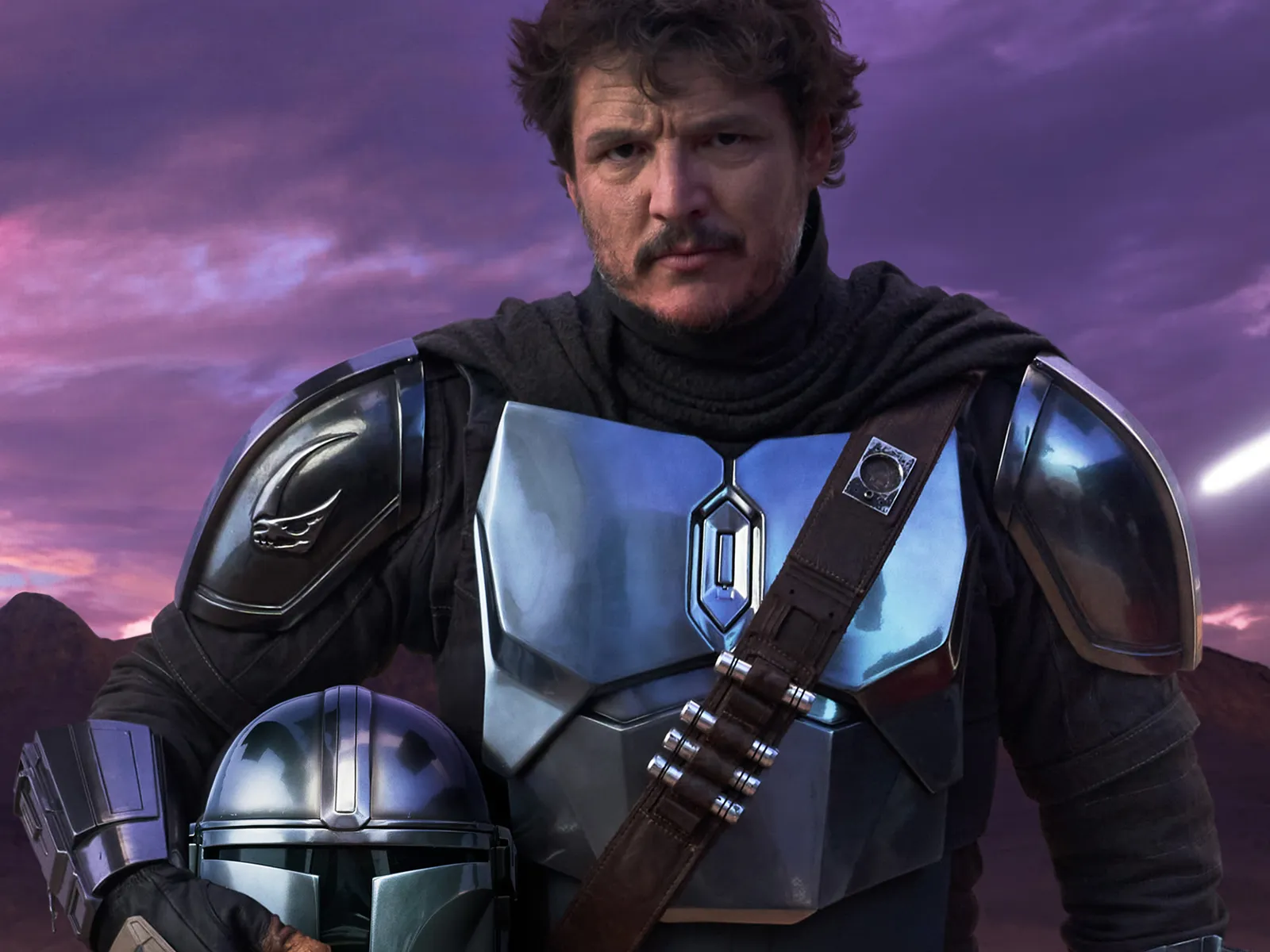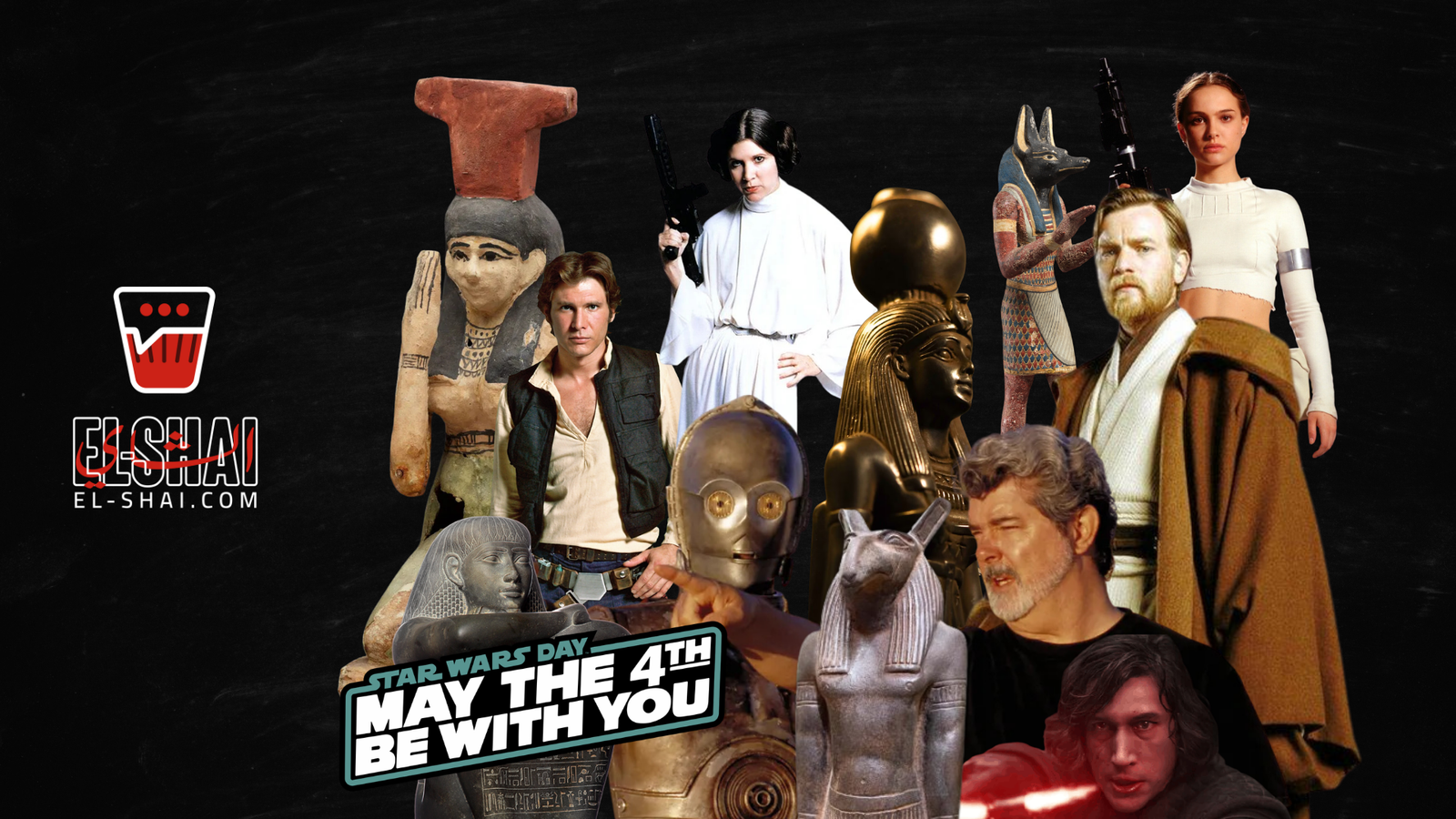
In honor of Star Wars Day, here are the parallels between George Lucas’s galaxy and ancient Egyptian mythology that fans have been quietly losing their minds over for years.
George Lucas has always described Star Wars as a synthesis of world mythologies. He credits Joseph Campbell, Akira Kurosawa, and the universal hero’s journey. What he doesn’t usually mention, and what fans have spent decades digging into, is just how much of the saga seems to map directly onto the gods and legends of ancient Egypt.
This May the 4th, instead of rewatching the Mustafar duel for the hundredth time, here are the theories worth your attention.
The Star Wars Skywalker Family Is the Osiris Myth
This is the spine of the entire connection, and the part that holds up best under scrutiny.
Anakin Skywalker as Osiris. Young Anakin goes by “Ani,” one of the names for Osiris in the Egyptian Book of the Dead. Both are tragic central figures who get violently dismembered: Osiris is chopped into pieces by his brother Set, and Anakin loses his limbs on Mustafar. Both are resurrected in incomplete form, unable to fully return to what they were. Osiris becomes ruler of the underworld. Anakin becomes Vader, ruling the Empire’s machinery of death from inside a life-support suit. Both even share the title “Lord.”
Padmé Amidala as Isis. Isis is the devoted wife who fights to preserve Osiris and protect their lineage. Padmé spends the prequels trying to hold Anakin together, then dies protecting the twins who carry his story forward. The parallel is almost too clean.
Luke Skywalker as Horus. Horus is the son who avenges his father and restores balance. In Egyptian mythology, Horus was literally called the “Skywalker” because he represented the sun crossing the horizon. The sun took twelve steps across the sky, which is where the word “hours” eventually comes from. Luke’s surname stops feeling like a coincidence pretty quickly.
Leia as Nephthys. Some readings extend the parallel to Leia, mapping her onto Nephthys, Isis’s sister and fellow protector figure in the Osiris cycle. The twin-protector dynamic checks out.
The Jedi Were Originally the Djedi
This is the linguistic argument that genuinely makes you pause.
Ancient Egypt had an esoteric priestly order called the Djedi. They were priest-warriors who wore hooded robes, carried staffs of power, and served as the Pharaoh’s personal guardians. They were tied to Djehuty (Thoth), the god of wisdom and magic. The Westcar Papyrus describes Djedi, who could perform supernatural feats, including reattaching severed animal heads at will.
Robed warrior-monks with staffs who guard the ruling class and channel a mystical force. The pronunciation alone, Djedi to Jedi, is hard to write off.
The Djed pillar, a column with four horizontal bars, was the Egyptian symbol of immortality. Egyptians covered sarcophagi with Djed images to ensure eternal life in the afterworld. The Jedi belief in becoming “one with the Force” after death is functionally the same idea: transcending physical death into a higher plane of existence.
Jar Jar Binks: The Most Contested Figure
This is where things get creative. Three competing theories try to pin Jar Jar to a specific Egyptian deity.
Jar Jar as Set. Set is the god of chaos, the desert, and storms, famously depicted as an amalgamation of strange animal parts with a long-snouted head no archaeologist has ever conclusively identified. Set murders his brother Osiris and orchestrates his downfall. This theory holds that Jar Jar’s bumbling facade hides the same role: the manipulator who engineers the collapse of the Republic and the fall of his “brother” Anakin. The overlap between the Sith and Seth names reinforces this reading.
Jar Jar as Heqet. Heqet is the frog-headed goddess of fertility and childbirth, associated with breathing life into newborns. Supporters point to Jar Jar’s amphibious design and connect him to Darth Plagueis, the Sith Lord who mastered the art of creating life through midichlorian manipulation. In this version, Jar Jar is a creator-trickster figure who manipulates life itself.
Jar Jar as Sobek. A smaller faction argues for Sobek, the crocodile god, based on Gungan biology and aquatic origins. The fewest takers, but it’s out there.
Kylo Ren Is Anubis
This one is almost too on-the-nose. Kylo Ren’s mask, with its elongated lower section and dark color palette, bears an undeniable resemblance to Anubis, the jackal-headed god of mummification and guide to the afterlife. Anubis oversaw embalming and attended the Weighing of the Heart ceremony, where the heart of the dead was placed against the Feather of Truth.
J.J. Abrams has a documented interest in Egyptian aesthetics, and Kylo’s obsession with death, ancestral legacy, and the relics of the past (specifically Vader’s melted helmet) maps perfectly onto Anubis as the keeper of the dead.
Han Solo and the Wandering Desert God
Han is a stretch in some readings and a bullseye in others. He is introduced wandering the deserts of Tatooine, operating as a lone outlaw outside the structures of power. Some theorists tie him to the wandering, exiled aspects of Set after his mythological defeat, or more loosely to the archetype of the desert trickster common across Egyptian and Near Eastern mythology.
The Naboo Lakes as the Primordial Waters
This is a deep cut. Egyptian creation mythology describes Nu and Naunet, the primordial waters from which all existence emerged. The sacred lakes of Naboo, where the Gungan civilization lives beneath the surface, are read as a direct nod to this concept. The planet’s name itself, “Naboo,” sits suspiciously close to “Naunet.”
Force Ghosts and the Akh
This is one of the most elegant parallels in the entire theory, and it deserves more attention than it gets.
In Egyptian religion, the Akh was the “effective dead,” a transformed spirit that had successfully navigated the afterlife to become a luminous, influential presence capable of guiding the living. Not a ghost in the sense of haunting, but a wise ancestor who continued to participate in the world.
Force ghosts (Obi-Wan, Yoda, and Anakin appearing in shimmering blue light to advise Luke) are functionally identical to the Akh. The visual treatment, the role they play, the philosophy behind them: all of it lines up.
The “High Ground” Is Older Than You Think
Obi-Wan’s iconic line on Mustafar has a much older pedigree. Egyptian temple reliefs and hieroglyphs have used an elevated position as visual shorthand for divine authority for over four thousand years. Pharaohs are depicted larger and higher than their subjects. Gods sit on raised thrones above mortals. The hierarchy of height equals power is baked into Egyptian iconography.
Obi-Wan was just continuing an ancient tradition.
So Did Lucas Actually Do This?
The honest answer: probably not directly. Lucas has consistently credited Campbell’s The Hero with a Thousand Faces and Kurosawa films as his primary influences. He has never publicly said he based the Jedi on the Djedi.
But Campbell’s monomyth draws heavily on Egyptian sources, since Egyptian mythology is one of the foundational texts Campbell himself drew on. The connection is one degree removed: Lucas absorbed Campbell, and Campbell absorbed Egypt. The fingerprints are still there, just filtered through an intermediary.
Whether the parallels are intentional borrowing, unconscious cultural inheritance, or what skeptics call “shapes in the clouds,” the sheer volume of overlapping details makes total dismissal feel intellectually lazy.
The May 4th Verdict
Ancient Egypt was telling stories about fallen fathers, avenging sons, robed mystic guardians, jackal-masked guides to the underworld, and luminous ancestral spirits thousands of years before anyone said, “A long time ago in a galaxy far, far away.”
Maybe Star Wars isn’t science fiction. Maybe it’s the oldest story we have, told one more time with lightsabers.
Which connection actually convinced you? The Anakin-Osiris arc, the Djedi-Jedi name swap, or Kylo Ren walking around in an Anubis mask? Drop your verdict in the comments.