

Just days after the devastating Al-Warraq Ring Road fire reignited conversations about road safety in Egypt, we somehow find ourselves having to explain why stopping in the middle of a highway to pray is a terrible idea.
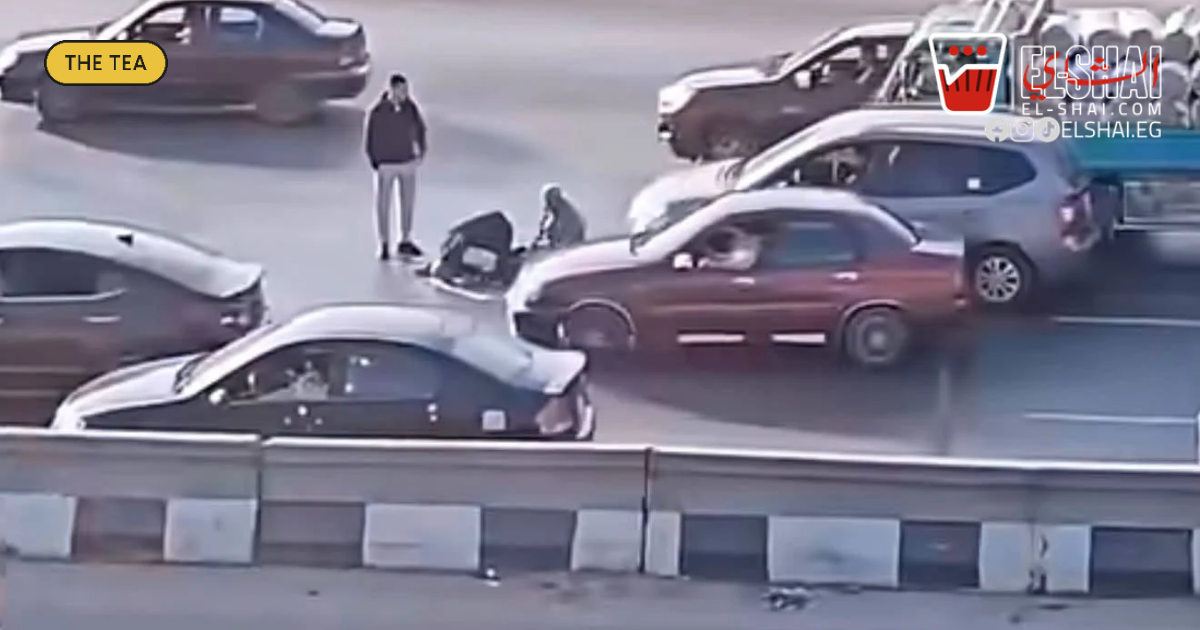
Just days after the tragedy, a video of two men stopping their car in the middle of the Ring Road to perform their prayers has gone viral, sparking widespread criticism.
The footage shows the men praying on the asphalt as vehicles pass dangerously close to them. Some drivers reportedly slowed down, thinking an accident had occurred or someone needed help.
The incident disrupted traffic, and the Ministry of Interior is currently examining the footage.
Praying in the Middle of the Ring Road Is Not an Act of Religious Devotion. It’s an Act of Irresponsibility.
Egypt is hardly a country where finding a place to pray is a challenge. Mosques are everywhere, and Islam itself offers accommodations for people traveling or facing exceptional circumstances.
So what exactly justifies stopping in the middle of one of Egypt’s busiest highways to pray?
What would have happened if a truck driver had failed to notice them in time? If another driver had swerved to avoid hitting them and collided with another vehicle?
Would the people injured in an entirely preventable accident have been an acceptable price to pay?
When Religion Becomes Performative
There is something particularly provocative about such a public display of religious devotion at the expense of everyone else’s safety.
Whether intentional or not, it comes across as performative religion: making worship as visible and disruptive as possible, then creating a situation where anyone who objects risks being accused of criticizing Islam itself.
It almost feels like fishing for criticism just to turn around and claim that the criticism is directed at religion rather than the irresponsible behavior.
And that distinction needs to be made very clear.
Nobody is criticizing these men for praying. People are criticizing them for stopping a vehicle in the middle of an active highway and putting lives at risk.
Religious expression should not give anyone immunity from criticism or accountability.
Even Dar Al-Ifta Says This Is Religiously Wrong
For anyone attempting to defend this behavior on religious grounds, Egypt’s Dar Al-Ifta has made its position clear.
The religious authority stressed that respecting traffic regulations is a religious obligation and that violating them is prohibited, with the severity of the sin increasing according to the harm caused to others.
Dar Al-Ifta has also previously clarified that praying on public roads is impermissible when it obstructs traffic or disrupts people’s affairs.
Protecting human life is one of the fundamental principles of Islamic law.
How can someone claim to be fulfilling a religious obligation while disregarding another in the process?
Of All Times, Now?
Perhaps the most infuriating aspect of this video is its timing.
Families are still grieving the victims of the Al-Warraq fire. Egyptians are still discussing the country’s road safety problems, demanding accountability, and questioning what could have been done to prevent the tragedy.
And here we are, just days later, having to explain why stopping in the middle of a highway to pray is dangerous.
We cannot collectively mourn the victims of road tragedies, demand accountability from authorities, and then excuse reckless behavior when it comes wrapped in religious sentiment.
Being religious does not exempt you from being a responsible citizen. If anything, it should make you more conscious of your responsibilities toward others.
Your relationship with God does not need an audience, and it certainly does not need to come at the expense of somebody else’s life.
Pray. Just get off the highway first.