

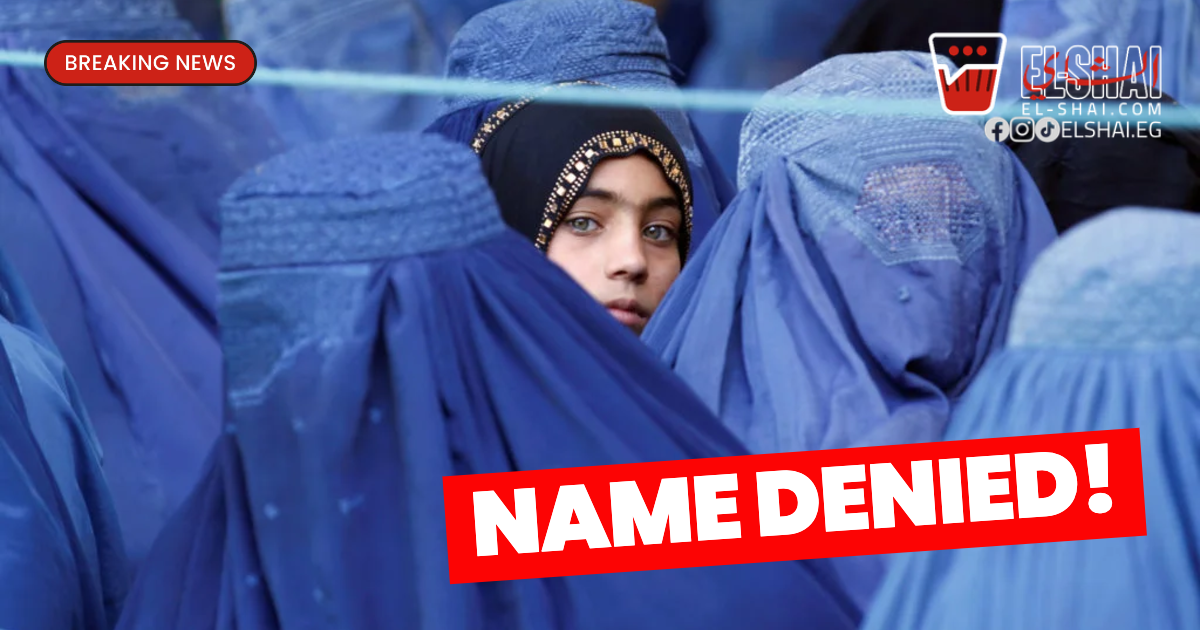
After years of restrictions on their education, employment, freedom of movement, and participation in public life, Afghan women are reportedly facing another attempt to erase their identities: the removal of their names from official records.
Reports from Afghanistan’s northern Balkh province suggest that Taliban officials have instructed healthcare workers and other public employees to stop using Afghan women names, including on medical prescriptions.
Instead, women are reportedly being referred to as “Bibi,” a term commonly used to address grandmothers or elderly women, regardless of their actual age.
While the reported restriction dates back several months, it has gained international attention over the past two weeks, prompting Taliban officials to publicly deny issuing such an order on November 28.
What Exactly Is Happening?
On November 12, a joint investigation by Zan Times and The Guardian documented the growing restrictions on Afghan women’s access to healthcare, including instructions to medical professionals in Balkh to replace female patients’ names with “Bibi.”
Subsequent reporting by El País on November 23 suggested that the practice extends beyond healthcare facilities to other government employees.
Afghan women’s rights activist Lalah Osmany also told the publication that testimonies described instances of women being addressed using degrading terms such as “goat” and “cow.”
There is currently no evidence that these animal names are part of an official directive.
The Taliban Denies Issuing the Order
On November 28, the spokesperson for the Taliban governor of Balkh told Afghanistan International that the governor’s office had not issued instructions prohibiting the use of women’s names in healthcare facilities.
The Taliban’s Ministry of Justice also denied the existence of any such law or order.
The reports, however, are based on testimonies from healthcare workers, women, and activists. Whether the practice is being imposed informally, and how widely it is being enforced, remains unclear.
There is also no confirmation that the restriction has been extended nationwide.
Why Are Women’s Names Considered Taboo in Afghanistan?
The practice of concealing women’s names predates the Taliban’s rule.
In parts of Afghan society, publicly mentioning a woman’s name has traditionally been perceived as dishonoring her male relatives. Women are instead identified through their relationships to men, as someone’s wife, mother, sister, or daughter.
This custom has extended to wedding invitations, gravestones, and official documentation.
It is a patriarchal cultural practice, not an Islamic requirement. Maryam, for example, is repeatedly mentioned by name in the Quran and has an entire chapter named after her.
Afghan Women Had Already Fought for Their Names
In 2017, Afghan women’s rights activists launched the #WhereIsMyName campaign, demanding that women be publicly recognized by their own names.
Their efforts were met with resistance and threats, but the campaign eventually achieved a significant legal victory.
In September 2020, Afghanistan’s former government approved an amendment allowing mothers’ names to appear on their children’s identification documents.
Less than a year later, the Taliban returned to power.
What Happens When a Woman’s Name Is Removed From Official Records?
A woman’s name on an official document can establish her identity, her relationship to her children, and her legal rights.
Without documentation proving that she is her children’s mother, a woman could face difficulties in custody disputes and other legal proceedings.
In healthcare, replacing patients’ names with a generic title could also increase the risk of identification errors, particularly when handling prescriptions and medical histories.
This is especially concerning given the existing restrictions on Afghan women’s access to male doctors, alongside the prohibition on women pursuing medical education.
Women are being restricted from becoming doctors while simultaneously facing restrictions on who can treat them.
Five Years of Restrictions on Afghan Women
Since the Taliban returned to power in August 2021, girls have been prohibited from attending secondary school, women have been excluded from universities and numerous professions, and their freedom of movement has been severely restricted.
According to UN Women, nearly eight in ten young Afghan women were excluded from education, employment, or training in 2024.
While the reported restriction on women’s names in Balkh remains disputed, it has revived concerns over the gradual exclusion of Afghan women from public and institutional life.
Six years ago, Afghan women celebrated winning the right to have their names included on their children’s identification documents.
Today, they are once again having to defend the importance of being recognized by their own names.
Read Next.
 News
The Antarctic Ozone Hole Reached One of Its Largest Sizes in 48 Years. Here Is Why Scientists Are Not Panicking
 News
Egypt’s Dar Al-Ifta Issues Fatwa Banning Recording Accident Victims Instead of Assisting Them
 News