


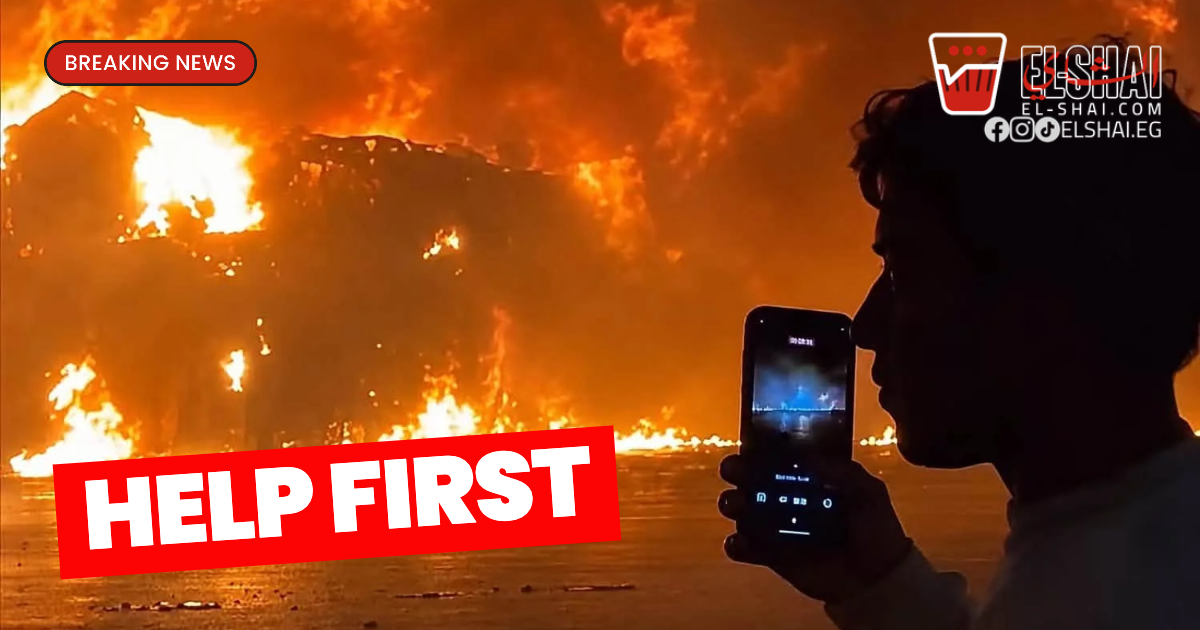
Egypt’s Dar Al-Ifta has ruled that filming accident victims haram when bystanders can help them instead, declaring the habit strictly forbidden under Islamic law if an onlooker has the ability to step in and save a life.
The formal advisory, issued Saturday, November 28, 2026, responds to a persistent public habit at collision sites and street disasters across Egypt, where onlookers regularly prioritize recording footage for social media views over administering first aid or calling emergency services.
Why Life Overrides Prayer in Classical Law
The religious authority drew directly on established Islamic jurisprudence to put the behavior into perspective. Under classical rulings, a Muslim performing obligatory prayer (fard)—one of the highest acts of worship—is required to interrupt that prayer if they witness an innocent person facing destruction or severe injury that they can prevent.
Dar Al-Ifta argued that if an individual must abandon mandatory prayer to save a human life, abandoning a live stream or smartphone camera to assist a bleeding bystander is an unquestionable moral priority.
The advisory body anchored its decision in Quranic verses that equate preserving one life with preserving all humanity, alongside prophetic traditions prioritizing communal aid and active rescue.
What You Must Do if You Cannot Render First Aid
The fatwa anticipates the common justification offered by onlookers who claim they lack medical training or the strength to lift wreckage. For anyone genuinely unable to provide direct physical intervention, the ruling outlines an alternative religious obligation.
Bystanders who cannot administer first aid must immediately notify the competent emergency services, call ambulances, and assist in clearing lanes so first responders can reach the scene unhindered.
- Call emergency responders immediately to report the exact location and scope of the accident.
- Clear routes and step back to ensure ambulances and civil defense vehicles have unblocked access.
- Keep crowds from surrounding injured people to avoid restricting airflow and medical attention.
Posting and Sharing the Footage Is Also Prohibited
Dar Al-Ifta also targeted the social media distribution pipeline that fuels on-the-scene filming. The body ruled that uploading, resharing, and circulating imagery of injured or deceased people violates the inviolable dignity granted to human beings in life and death.
The ruling highlighted the severe psychological harm inflicted on families who encounter graphic videos of their loved ones circulating on TikTok, Facebook, and X before receiving formal notice from authorities.
A narrow legal exception remains: recording an incident is permissible only when legally necessary to preserve legal rights, document crimes, or assist official state investigators—and even then, only on the condition that the camera operator never impedes rescue operations.
Changing the Reflex at the Crash Scene
Over recent years, Egyptian road collisions and public accidents have consistently produced crowds holding up phones before checking whether a passenger is conscious. Digital platforms incentivize speed and shock value, turning private agony into algorithmic traction.
Dar Al-Ifta’s directive addresses that reflex directly, reminding the public that human dignity is not currency for digital reach. When an emergency happens on an Egyptian street, the hand that moves first should be reaching out to help, not reaching into a pocket for a phone.
Read Next.
 News
The Antarctic Ozone Hole Reached One of Its Largest Sizes in 48 Years. Here Is Why Scientists Are Not Panicking
 News
After Years of Restrictions on Education and Employment, Afghan Women Are Reportedly Being Stripped of Their Names
 News