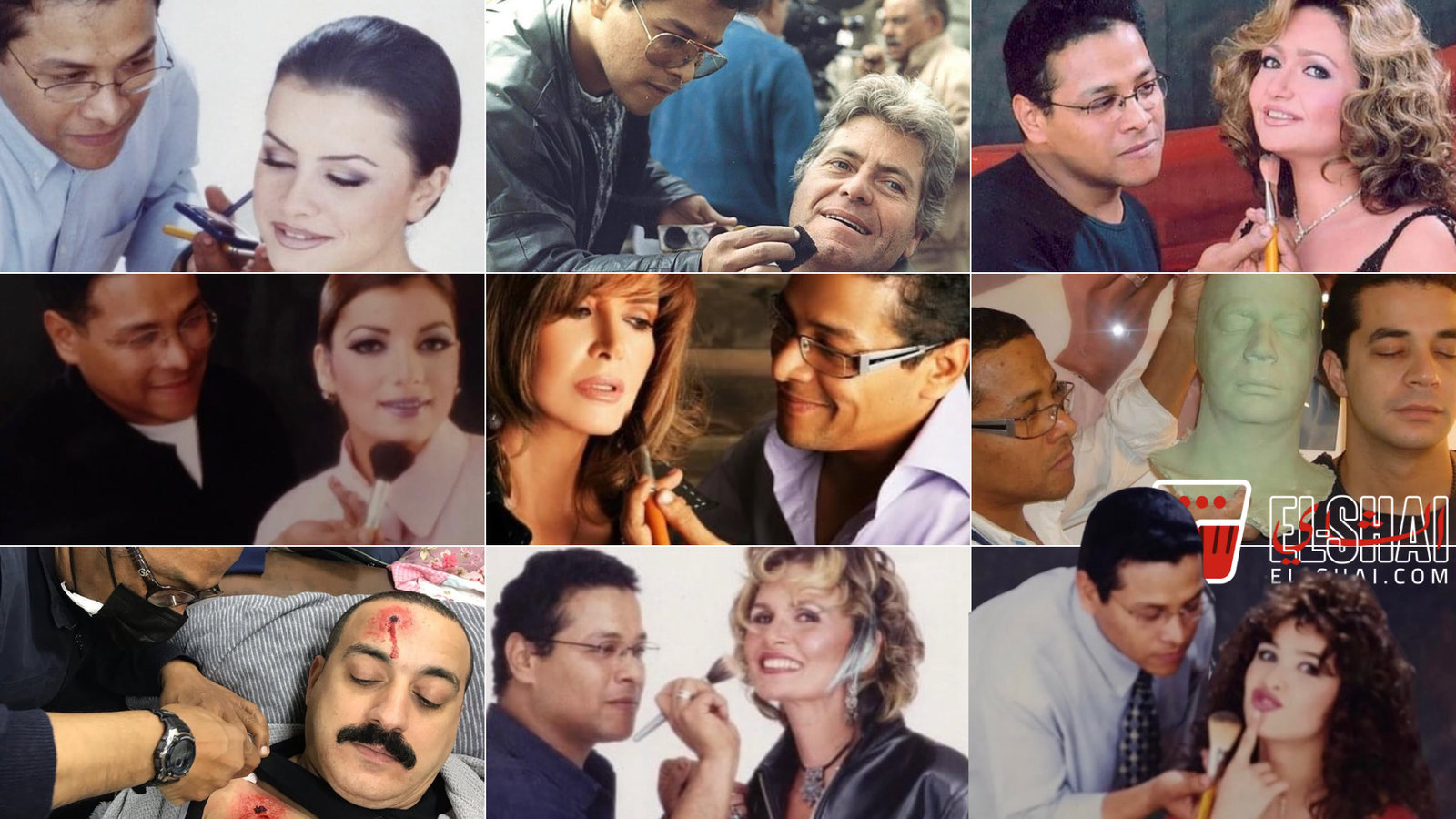
Mohamed Abdelhamid, one of the most respected makeup artists in Egyptian cinema and television, died today. It was Tuesday, 23 December 2025. The cause was complications from chronic kidney failure. He had been hospitalized earlier this month.
His son, actor Ahmed Abdelhamid, confirmed the news this morning and announced that funeral prayers would be held later today at the Police Mosque in Sheikh Zayed City.
Although his name rarely appeared in headlines, Mohamed Abdelhamid’s influence was felt throughout Egyptian storytelling. As we reflect on his legacy, it is evident in the characters audiences remember and the standards he set behind the scenes.
Crafting Characters, Not Just Faces
Mohamed Abdelhamid began his career as a makeup assistant on major Egyptian films, including Zawgat Ragol Mohem, Al-Irhab, Kaborya, and Ice Cream Fi Gleem. Working on these productions early in his career placed him alongside some of the industry’s most influential filmmakers and stars. This experience formed the foundation of his technical discipline and artistic sensibility.
His breakthrough came in 1991 when he served as the main makeup artist for the television series Dameer Abla Hekmat. The series, which aired that year, marked a turning point in his career, establishing him as a key creative contributor rather than a background technician.
From that point on, Abdelhamid’s makeup consistently served the story. His work focused on psychological context and emotional truth, enhancing performances without being distracting.
Defining Work Across Generations
Over the following decades, from the 1990s through the 2020s, Abdelhamid worked on influential Egyptian productions, including Rod Qalbi, Al-Attar Wal Sab’ Banat, Zaat, Cairo: Kabul, and Al-Nemr.
He collaborated with many major Arab stars, including Sabah, Warda, Yousra, Mervat Amin, Laila Elwi, Farouk El-Feshawy, Sherif Mounir, Hussein Fahmy, Ahmed Helmy, and Khaled El Nabawy.
Among his most memorable transformations were the makeup designs for Ahmed Zaki as President Anwar Sadat and Khaled El Nabawy as Dr. Mustafa Mahmoud. These roles remain iconic, in part because the characters were brought to life with such visual credibility.
His Final Work
Mohamed Abdelhamid’s last major project was the 2022 series Room 207. The show, completed just three years before his passing, relied heavily on psychological tension and atmosphere. Makeup played a crucial role in establishing its unsettling tone. Even late in his career, Abdelhamid demonstrated the same precision and instinct that had defined his artistry for decades.
A Legacy Carried Forward
Abdelhamid’s influence extended beyond the screen and into his home. His daughter, Aya Abdelhamid, became a successful makeup artist, building her career on the discipline and craft she inherited from her father.
His son, Ahmed Abdelhamid, often accompanied him to film sets as a child. Those early experiences sparked a deep love for cinema. Ahmed’s passion eventually led him to an acting career. Together, his children reflect both the personal and professional legacy Abdelhamid leaves behind.
More Than a Makeup Artist
Mohamed Abdelhamid saw makeup not as an accessory, but as a narrative tool. He believed faces carry stories, and he treated his craft with seriousness, care, and respect.
His work endures in characters, performances, and memories that shaped generations of Egyptian cinema and television. The love and respect shown by his colleagues and family speak to the impact he left behind.
Mohamed Abdelhamid leaves behind more than a body of work—he leaves behind a standard.