How unregulated paparazzi are damaging the industry and dragging real journalists down with them
The problem with Egypt’s so-called entertainment journalism is not new, sudden, or accidental. It has been building quietly for years, tolerated under the excuse of access, visibility, and “that’s just how things are.”
What changed recently is that the behavior has become impossible to ignore, too blatant to reframe, and too harmful to brush off as chaos or bad organization. When cameras stop documenting public moments and start actively violating people, the issue is no longer about coverage. It is about power, entitlement, and a system that refuses to regulate itself.
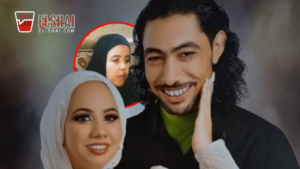
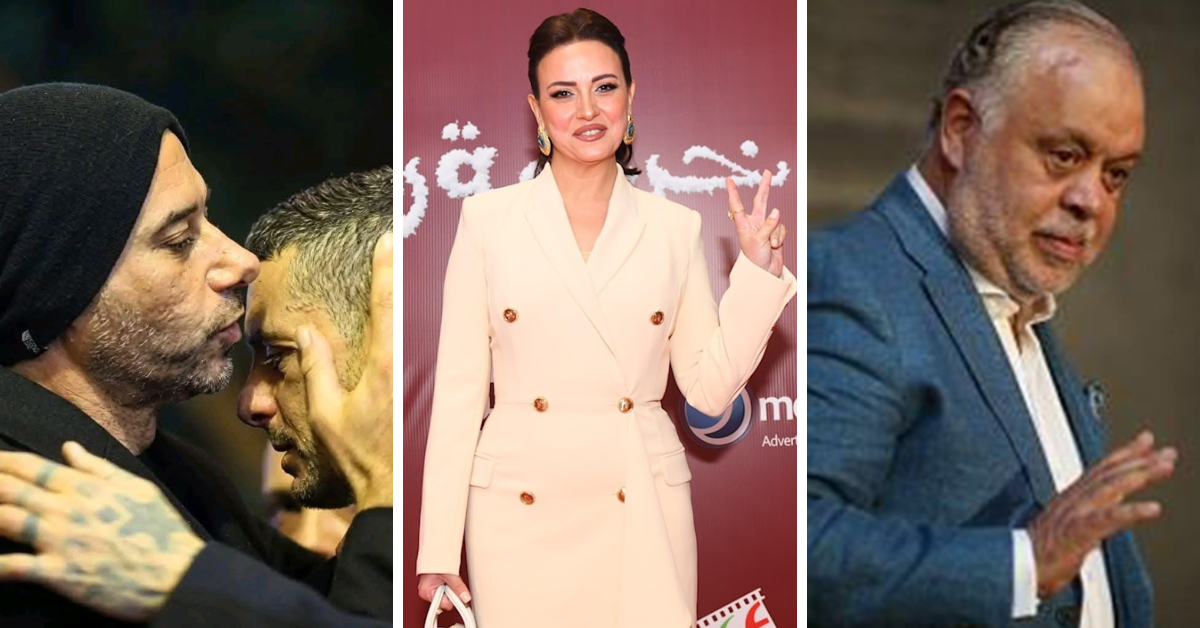
That is why what happened to Riham Abdel Ghafour at the premiere of Khareetet Ra2s El Sana matters far beyond one red carpet. Cameras were deliberately angled to take upskirt photos, not by accident and not in a rush, but intentionally.
This was not aggressive coverage or a lack of crowd control. It was harassment carried out by people hiding behind the title of entertainment journalists, confident that nothing would happen to them afterward. As usual, public discussion focused on reactions, statements, and optics, while the act itself was diluted, softened, and quickly buried.
When Grief Is Treated as Content
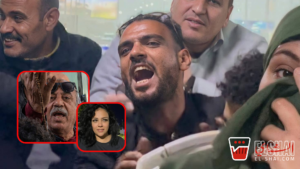
This behavior did not begin at a film premiere, and it certainly did not end there. During the funeral of Somaya El Alfy, grief was turned into material. Photographers crowded her son, Ahmed El Fishawy, pressed cameras into his face, and filmed him at one of the most private moments of his life.
He tried to create space, then resorted to sarcasm, asking them to treat the funeral like a red carpet just to make them step back. They did not. When he eventually snapped and grabbed a phone, public attention shifted to judging his reaction rather than condemning the people who refused to respect his loss.
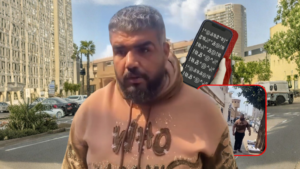
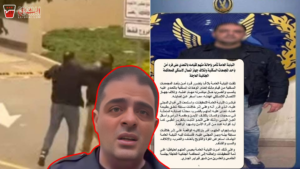
The same scenario played out with Ahmed El Saadany after the death of his father, Salah El Saadany. A man in mourning was forced to physically confront cameras invading his personal space, only to be labeled aggressive afterward. In all of these cases, the pattern is identical. The violated are interrogated, while those who violate them are protected by silence and familiarity.
These People Are Not Journalists, and the Industry Knows It
The most dangerous part of this situation is the refusal to name it clearly. Many of the people responsible are not journalists in any professional sense. They are not employed by media institutions, not bound by contracts, and not subject to any ethical code.
They freelance per request, per clip, per viral moment. They mix themselves in with accredited press at premieres, show up uninvited to events, and rely on public spaces and poor organization to capture footage they were never authorized to take.
Because they stand next to real journalists, carry cameras, and shout questions, they are treated as part of the same ecosystem, even though they operate entirely outside of it.
Social Media Turned Access Into a Loophole
Social media has made the problem significantly worse, not because of visibility, but because of how access is abused. Many of these individuals enter events through established platforms they freelance with, benefiting from the credibility and invitations of those institutions, then use interview opportunities to push unrelated or deliberately controversial questions for their own personal pages.
In doing so, they take up space and time they were never entitled to, overshadow journalists who were properly commissioned, and exploit access granted for professional coverage to serve private agendas. This is not a gray area. It is unethical, and it happens repeatedly without consequence.
This happens even at major festivals, including Cairo International Film Festival, which should represent the highest standard of press organization in the country.
In one particularly telling incident, we personally witnessed an individual gain access through a legitimate platform, then abuse that access during off-hours of the red carpet by bringing in random women who were paid by the hour, deliberately dressed in revealing outfits, and positioning them for staged photos.
The intention was to publish the images on his obscure Facebook page as if these women had been officially invited by the festival, manufacturing a scandal and framing it as a moral or cultural failure on the festival’s part. When it became evident that access was being misused and identities were deliberately misrepresented, the individual was removed from the festival.
Instead of taking responsibility, they later used the very same platform that had originally granted them access to publicly attack the PR professional handling the event, turning a clear case of misconduct into a targeted smear campaign. This is exactly what unregulated access enables.
Premieres Are Failing by Design
Premieres themselves are another structural failure. Because many are held in public cinemas, anyone attending can walk in, stand in press areas, block cameras, shove accredited journalists aside, and start filming. We have dealt with repeated confrontations with random attendees who simply decided that press spots were theirs because they bought a ticket to see some random film at the cinema.
There are no IDs, no access cards, no enforced zones, and no real separation between guests, press, and opportunists. When chaos follows, all media professionals are treated as one indistinguishable group, regardless of conduct or credibility.
Institutional Silence Keeps the Cycle Going
The absence of consequences has normalized the behavior. The Journalism Syndicate does not intervene meaningfully. The Actors’ Syndicate issues statements and attempts damage control, but without enforcement power, those efforts rarely lead to structural change.
Everyone acknowledges the problem in theory, yet in practice, the same individuals return, the same violations repeat, and the same excuses are recycled.
This Is a Regulatory Failure, Not a Cultural One
This is not about fame, temperament, or sensitivity. It is about regulation. If someone shows up uninvited to a premiere or a funeral and refuses to leave, the police should be called. If organizers cannot control access, premieres should not be held in open public spaces. If an event cannot guarantee press identification and separation, it is failing artists, journalists, and PR professionals alike. And if individuals repeatedly abuse access, they should be permanently barred instead of quietly tolerated.
Most importantly, the industry needs to stop calling harassment coverage. As long as that line remains blurred, actresses will continue to be violated, grief will continue to be exploited, and real journalists will continue to pay the price for behavior they neither condone nor participate in. This is not a fringe issue. It is structural, and until it is treated as such, nothing will change.