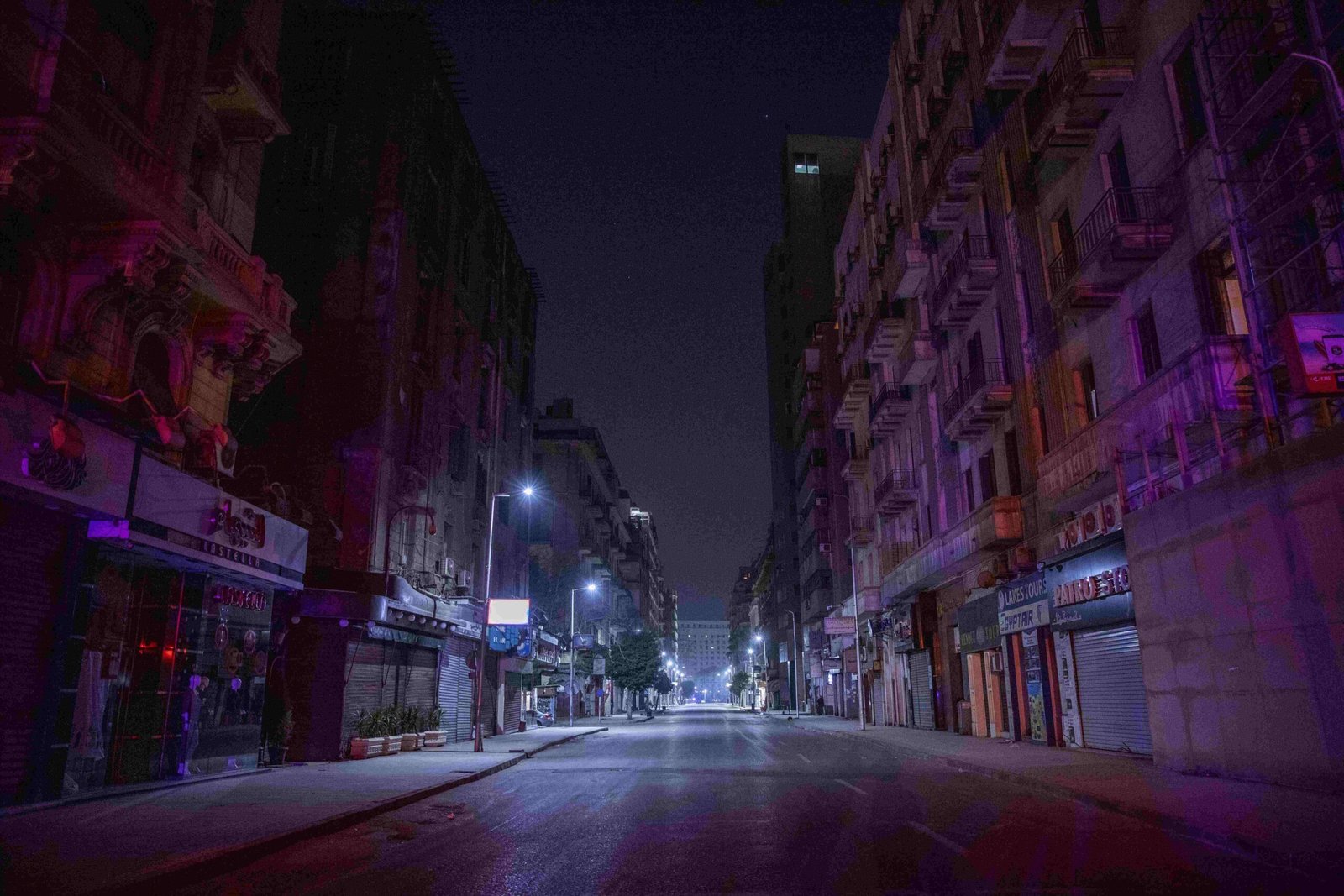
As of Saturday, March 28, Prime Minister Mostafa Madbouly issued a decision mandating that all public venues, commercial centers, and restaurants close from 9 PM onward, with extended hours until 10 PM on Thursdays and Fridays. You can still leave your house. You can still walk the street. You just won’t find much open when you get there.
The reason is that Egypt’s natural gas import bill more than doubled, driven by disruptions to energy flows across the Middle East. The government aims to save $1.1 billion monthly through these measures, with hospitals, pharmacies, supermarkets, bakeries, and fuel stations exempt. Delivery services can still operate around the clock. The measures will initially remain in force for one month, after which authorities will review their impact.
So no, it’s not a curfew. Nobody is being ordered indoors. But here’s the thing — when there is nowhere to go after 9 PM, a lot of people are going to end up home anyway. And for a significant portion of Egyptian women, home is not the safest place to be when their abusers have nowhere else to go either.
That’s the conversation we need to have.
Think about what public spaces actually do for people beyond commerce. The ahwa at the corner. The late-night walk on the Corniche. The café that puts physical distance between a woman and a tense home, even for just an hour. Egypt is a country of over 100 million where hanging out late into the night isn’t a luxury — it’s culture, infrastructure, and for many, a pressure valve. When you compress all of that into a window that ends at 9 PM, the pressure doesn’t disappear. It just moves somewhere else.
For women in difficult home situations, that “somewhere else” is exactly the problem.
The Numbers We Can’t Ignore
Egypt already has a documented, serious domestic violence problem — and that’s before any policy changes.
According to Egypt’s Central Agency for Public Mobilisation and Statistics (CAPMAS), approximately 31% of currently or previously married Egyptian women between the ages of 15 and 49 reported experiencing some form of physical, sexual, or psychological abuse by a spouse. That’s nearly one in three.
A study backed by the World Health Organization (WHO), conducted in Alexandria, found the figure even higher — over three-quarters of participants reported experiencing spousal violence during their marriage, spanning emotional, physical, economic, and sexual abuse across all socioeconomic backgrounds.
According to UN Women, roughly 7.8 million Egyptian women suffer from some form of violence yearly — whether perpetrated by a spouse, fiancé, or someone in their immediate circle.
These numbers didn’t emerge from unusual circumstances. This is the baseline.
We’ve Seen This Before — The COVID Precedent
Now factor in what we learned from COVID-19 lockdowns — a period that, while more extreme than what we’re facing now, offers the closest real-world data we have on what happens when people are pushed into domestic spaces with limited external outlets.
According to a systematic review compiled by the National Institutes of Health (NIH), domestic violence incidents increased by 8.1% after jurisdictions imposed pandemic-related lockdown orders. In some countries, emergency calls related to intimate partner violence surged by 25% or more.
UN Women described the global pattern bluntly: COVID-19 created conditions that are ideal for abusers by forcing people into lockdown, triggering what the organization called a “shadow pandemic” layered on top of the public health one. Researchers further noted that lockdowns separated potential victims from the social networks — friends, neighbors, colleagues, teachers — who would otherwise notice signs of abuse and help people find a way out.
Egypt lived through its own version of this. A study published in PubMed examining domestic violence during the COVID-19 pandemic in Egypt found that recorded cases of violence against women increased significantly during that period compared to pre-pandemic years.
Today’s situation is different in degree — but the mechanism is uncomfortably familiar. Less access to public life. More time in enclosed domestic spaces. More economic stress on households already under severe financial pressure. That combination has a track record, and it isn’t a good one.
The Marital Rape Blind Spot
Forced confinement doesn’t only raise the risk of physical violence. For many women, the threat inside the home is also sexual — and in Egypt, the law offers no protection against it.
Marital rape is not criminalized under Egyptian law. According to research documented by the Egyptian Initiative for Personal Rights (EIPR) and multiple legal scholars, marriage is still treated as a form of blanket consent under the current penal code. This means that if a woman is coerced into sex by her husband, there is no crime to report and no case to make.
According to the 2014 Egypt Demographic and Health Survey, 4% of married women reported that their husbands had forced them to perform sexual acts — a figure widely acknowledged by researchers to be significantly underreported. A 2018 study cited by EIPR put the figure of married women experiencing marital rape at approximately 10%. Figures cited by researchers and legal advocates point to numbers that are even more alarming — though the full scope remains likely underreported given the absence of any legal framework that names the act as a crime.
When there is no legal name for what’s happening, there is no legal road out of it.
Unwanted Pregnancy Is Also Part of This Conversation
Yes, people are already joking about a baby boom. Nine months from now, maternity wards, electricity jokes, all of it. But behind the humor is a reality that has at least three separate problems layered inside it — and only one of them involves abuse.
The coercion layer we’ve already addressed. But coercion isn’t the only road that leads to an unwanted pregnancy in Egypt, and that’s exactly what’s missing from this conversation.
There’s the financial reality first. The entire planet is in the middle of one of its most brutal economic stretches in recent memory. So when we talk about a potential pregnancy surge following weeks of everyone being home earlier than usual, we’re talking about that landing on top of households that are already stretched to their absolute limit.
Then there’s the part Egypt really doesn’t like to talk about: sexual education, or the near-total absence of it. According to a 2024 study published in BMC Women’s Health, young married and unmarried women in Egypt suffer from a serious lack of access to sexual and reproductive health knowledge, with researchers noting that the broader understanding of sexual health is clouded by misconceptions and a deep cultural stigma that discourages women from seeking medical advice.
Women in the study reported knowing that contraceptives existed — pills, IUDs — but had little understanding of how they actually work, what the side effects are, or which method would suit them. Many had never discussed it with anyone other than their husbands. Condoms didn’t even register as a contraceptive option for most participants, largely because they were framed as reducing male pleasure rather than preventing pregnancy.
According to UNFPA Egypt, 41% of married Egyptian women were not using any form of family planning method as of the last comprehensive national survey. Among married women aged 15 to 19, only 23% use contraception at all, based on the most recent figures available. And critically, Egypt’s reproductive health policies have historically targeted only married women — which means unmarried people, young adults, and anyone outside that narrow bracket are essentially left to figure it out on their own.
The gap between knowing contraception exists and actually having consistent, informed, stigma-free access to it is enormous. A 9 PM commercial closure does nothing to close that gap. It just quietly increases the chances of its consequences showing up nine months from now.
A baby boom isn’t a cute statistic when the economy is broken, sex education is almost nonexistent, and the legal framework doesn’t protect women from what happens in their own homes. It’s three separate failures arriving at the same door at the same time.
And If Someone Needs to Leave?
Here’s where the infrastructure failure becomes impossible to ignore. Even for women who recognize they’re in danger and want out, the support system is threadbare.
According to research documented by the Egyptian Center for Women’s Rights (ECWR), Egypt’s domestic violence shelters are extremely difficult to access — they require ID documents that women who have fled abuse typically don’t have on them. Many shelters exclude pregnant women. Many don’t allow children above a certain age to stay with their mothers, which means most mothers in crisis face an impossible choice between their own safety and keeping their children with them.
If the exit ramps don’t work, it matters very little what the streets look like at 9 PM.
This Isn’t Anti-Policy. It’s Pro-Accountability.
The energy crisis is real. According to Reuters, Egypt’s monthly fuel import bill nearly tripled due to regional tensions disrupting energy flows. The government has signalled it is adopting a gradual approach to the measures, with exemptions for essential services, framing the decision as a necessary response to an unprecedented energy cost burden.
Fine. But minimizing harm has to include the harm that happens behind closed doors.
Saving over a billion dollars on the electricity bill matters. So does having a plan for what happens when millions of people are pushed home earlier than usual, in households already strained by historic inflation, with no legal protection for the most vulnerable members of those households, and a shelter system that barely functions.
A 9 PM commercial closure is an economic decision. But it lands on top of a social reality the government cannot afford to pretend doesn’t exist.
The cafes closing is manageable. The silence around everything else is not.
If you or someone you know needs support, the National Council for Women’s hotline is 15115. Share this if you think the conversation needs to go beyond electricity bills.