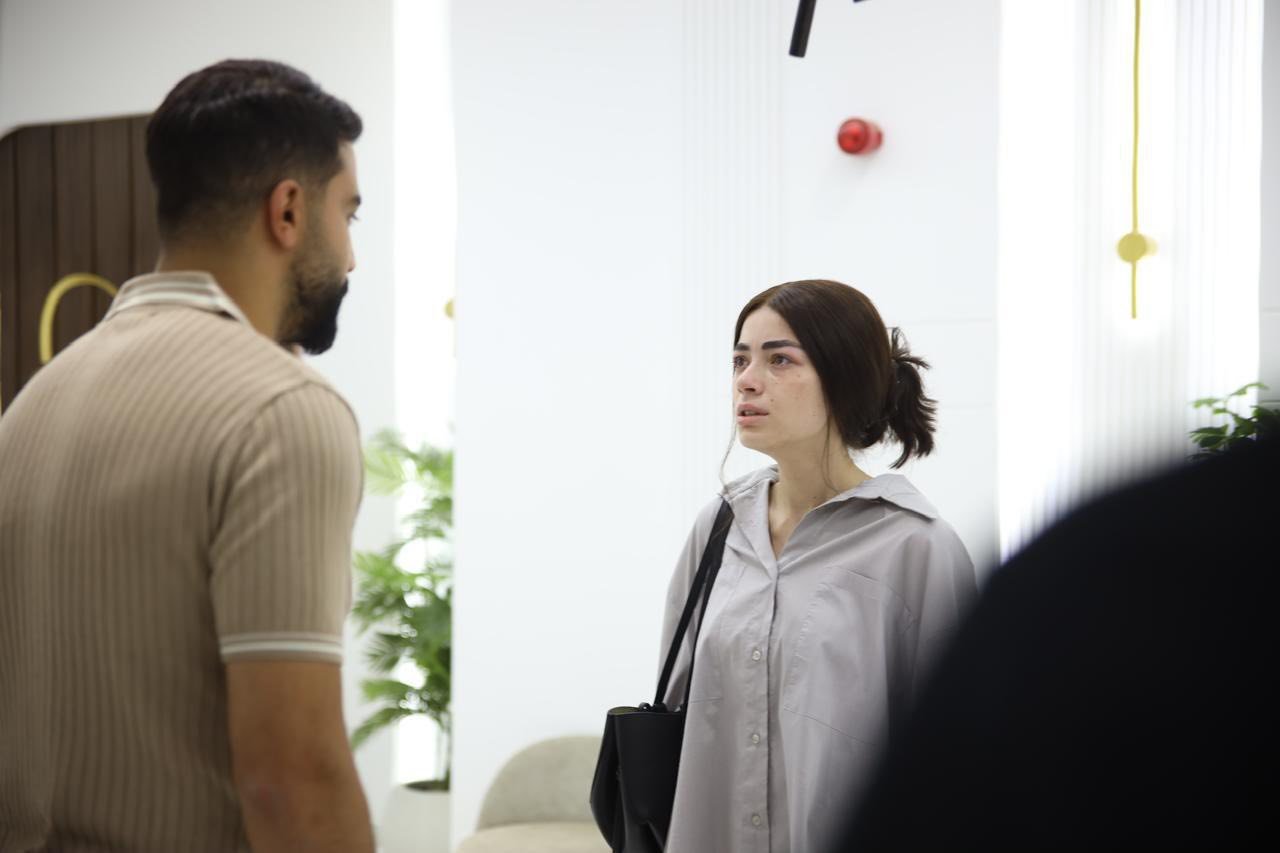
Leila Zaher and Hazem Ihab have officially given us Egypt’s most polarizing TV couple of 2025 with “Hind’s Story” from “Ma Tarah Laysa Kama Yabdo” (What You See Is Not What It Seems), and Egyptian social media is practically on fire with hot takes, psychological analyses, and family arguments that are probably happening in living rooms across the country right now.
The series topped Watch It‘s most-watched list within hours of its premiere, but the real drama is happening in the comment sections.
Half the audience is screaming “victim-blaming!” while the other half is yelling “she brought it on herself!”
Meanwhile, psychology enthusiasts are having a field day breaking down attachment disorders and narcissistic abuse patterns like they’re defending their thesis.
So what’s really going on with this couple that has everyone picking sides?
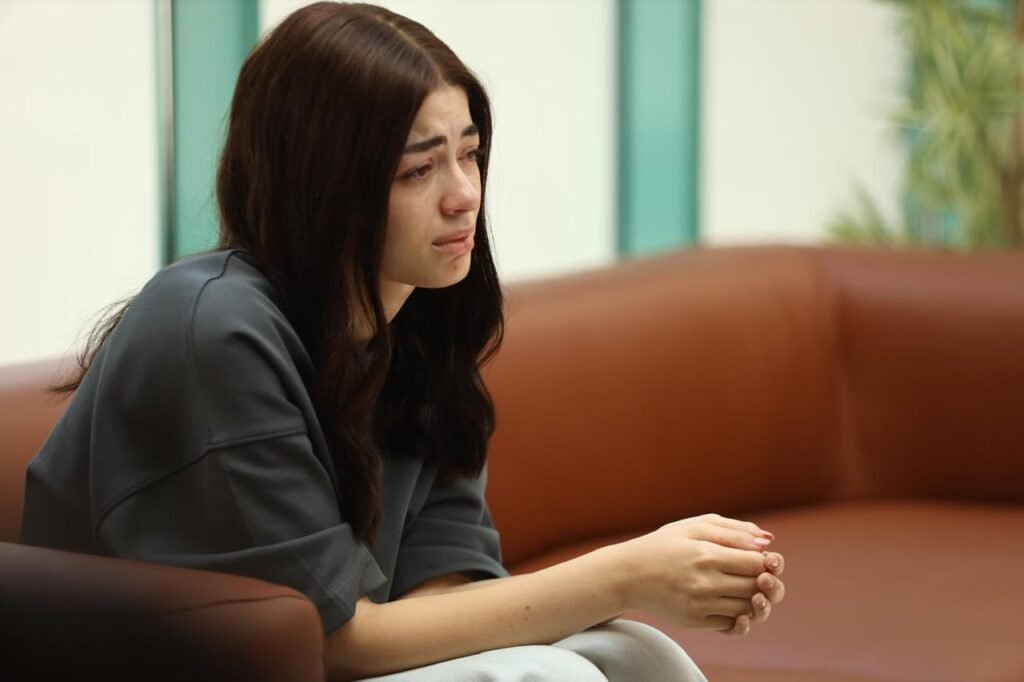
The Case for Hind:
Hind isn’t just naive – she’s textbook preoccupied attachment disorder walking around in Leila Zaher’s perfectly broken performance. The psychology checks out in ways that make this hard to watch.
The Red Flags Were Neon Signs
- Youssef isolated her from her family before they even got married
- He made her choose between her career and their relationship on their engagement night
- He controlled everything, down to her birth control pills
- When she got him a clinic with her inheritance, his response was basically “eh, could be better.”
But here’s where it gets psychologically twisted. Hind’s responses aren’t “stupid” or “weak.” They’re textbook trauma responses.
When she discovers he’s been lying about the apartment ownership and he vanishes, her first instinct isn’t anger.
It’s panic.
She calls him repeatedly, begging him to just confirm he’s safe because “I’m scared something happened to you.”
That’s not love, bestie. That’s attachment disorder in 4K.
Now The Case For Youssef:
Can we discuss how Hazem Ihab made us collectively dislike a fictional character? Because the performance is so on-point that viewers are literally saying “I hate you” in his Instagram comments.
Youssef isn’t just selfish – he’s clinically narcissistic, and the show does an incredible job of illustrating the difference.
Selfish people put their needs first. Narcissists need to crush others to feel superior.
The Narcissist’s Playbook in Action:
- Image Obsession: The perfect doctor, the ideal husband – until his professional image cracked when he got fired
- Emotional Vampirism: He literally controlled her birth control to maintain power over her reproductive choices
- Strategic Destruction: It wasn’t enough to take her money – he had to make her believe their entire life was a lie
- Zero Empathy: When she was in a coma after the accident, he went out partying
The most chilling part? His “psychological complex” about his working mother, which he used to justify making Hind quit her job.
Classic narcissistic manipulation – weaponizing personal trauma to control someone else’s choices.
But When Victimhood Meets Frustration?
Hold up, because audiences aren’t buying the victim narrative wholesale, and they’re not entirely wrong to question it.
“She’s ungrateful to the family that raised her, disrespectful to everyone who warned her, and stubborn to the point of stupidity,” some can argue.
“This isn’t about her mother dying or being raised by her aunt. This is about a generation that thinks rebellion equals independence.”
But here’s the thing…
- Her family explicitly warned her about Youssef
- She chose to hide the relationship and lie to people who cared about her
- At the police station, she had every opportunity to file a report – and backed out
- Even after he abandoned her, she defended him: “No, no, mama, Youssef loves me.”
The generational divide is real here. Older viewers see a spoiled girl who ignored wise counsel and reaped the consequences.
Younger viewers see a woman trapped in a cycle of psychological manipulation.
Even With All These Flaws, Why Do We Struggle to Empathize With Weakness on Screen?
Here’s where things get really uncomfortable – and it’s not just about the characters anymore.
When Hind collapsed under betrayal, audiences didn’t just watch the drama – they judged her. Some cried with her, others rolled their eyes.
“Why doesn’t she fight back? Why is she so weak?”
But weakness on screen makes us deeply uncomfortable. And that discomfort says more about us than about the character.
The Script vs. Our Expectations
Television usually feeds us heroines who rise from the ashes, who confront abusers head-on, who shout back in courtrooms or smash doors when betrayed.
We expect resilience to be instant, cinematic, and satisfying.
Hind doesn’t give us that. Instead, she gives us denial, pleading, self-blame – all classic responses of someone trapped in a manipulative relationship.
The problem is that realism rarely feels heroic. Watching someone freeze or cling to the person hurting them doesn’t spark admiration; it sparks frustration. We don’t want to see ourselves in that mirror.
The Psychology Behind Our Discomfort
When audiences reject Hind, they’re really defending themselves. It’s easier to think, “If I were in her place, I’d leave him immediately,” than to admit we might freeze or forgive too.
Psychologists call this a self-protective bias: by blaming the victim, we convince ourselves we’re immune.
We’re not.
Another layer? Many people struggle with weakness because it reminds them of their own. Seeing Hind silenced in a police station or excusing Youssef’s lies isn’t just her story – it’s a reminder of every time we swallowed our words, every time we stayed when we should’ve left.
And that stings.
But Plot Twists: It’s Based on the Writer’s Real Life Story
Here’s what makes this even more intense – writer Hind Abdullah based this on her actual life. This isn’t just entertainment; it’s someone processing their trauma on national television.

Which explains why every psychological detail feels so devastatingly accurate.
The show is basically saying: forget your expectations of how victims “should” behave. This is how it actually happens. Messily. Quietly. With way more self-doubt than righteous anger.
And the audiences are having to sit with that reality. We’re having conversations about mental health, toxic family dynamics, and women’s independence that we’ve been avoiding for years. The discourse is messy, but it’s happening.
The Real Toxicity: Why We’re All Fighting
Here’s what’s actually happening – this storyline is forcing audiences to confront uncomfortable truths about relationships, family dynamics, and gender expectations.
Team Hind:
They see a woman whose psychological vulnerabilities were systematically exploited by a predator.
They’re frustrated by victim-blaming and the expectation that she should have been “stronger.”
Team “She Should Have Known Better”:
They see a woman who had support systems and warning signs but chose to ignore both. They’re frustrated by what they perceive as willful stupidity disguised as romance.
Team Empathy for the Issue, Not the Person
Interestingly, audiences praised the story. They called it “important,” “eye-opening,” “a reminder about toxic marriages.” However, the empathy often stopped at the case, rather than the character.
Why? Because empathizing with the issue keeps us safe. It’s abstract. Empathizing with Hind means admitting weakness exists inside us – and that’s a step many resist.
The Uncomfortable Reality
Both perspectives have merit. Hind displays classic symptoms of attachment disorder – but that doesn’t excuse the lying, the disrespect to her family, or the consistent poor judgment.
Youssef is absolutely a narcissistic manipulator – but Hind wasn’t a helpless victim with zero agency.
The most toxic element isn’t Hind or Youssef individually – it’s the dynamic they created together, and how it mirrors patterns we see in real Egyptian relationships every day.
The Tea?
Hind and Youssef aren’t just Egypt’s most toxic TV couple at the moment – they’re a mirror reflecting our own relationship patterns, family expectations, and cultural blind spots back at us. The reason everyone’s fighting about them is because we’ve all seen some version of this story play out in real life.
Maybe the real conversation we should be having isn’t “who’s right” – it’s “how do we break these cycles before they destroy more lives?”
Because in real life, victims don’t always roar. Sometimes they whisper, stumble, or stay. And those stories are worth telling, even if they don’t make us feel like heroes.
The real conversation we should be having isn’t “is Hind weak or strong” – it’s “why are we so afraid of seeing weakness as human?”
What do you think – is Hind a victim of manipulation or a cautionary tale about ignoring red flags?
And more importantly, why does her vulnerability make us so uncomfortable?