


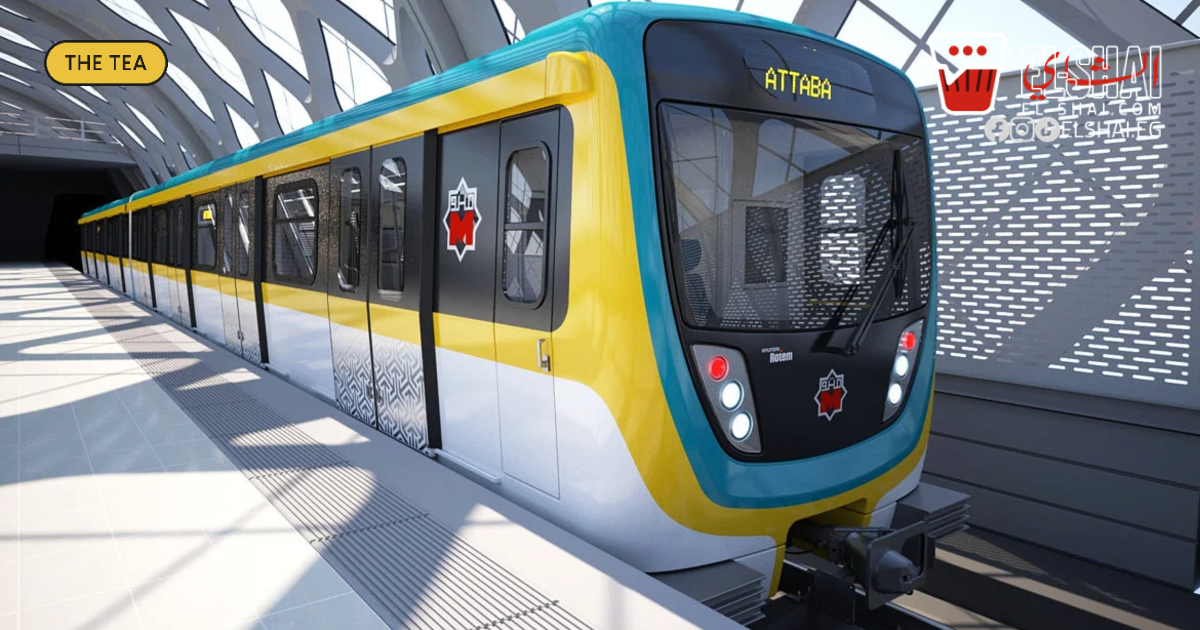
Trial operations for the new electric Alexandria Metro are scheduled to begin in March 2027, according to implementation timelines released by the Ministry of Transport and reported by Egypt Independent.
The project converts Alexandria’s aging Abu Qir commuter rail line into a fully electrified rapid-transit corridor, overhauling an overburdened route that has connected the city’s northeastern suburbs to downtown for generations.
Read also: The Vanishing Crane Of Tahrir Square And The Paperwork Heist In The 80s’
Alexandria Metro Route Alignment and Phase 1 Stations
The first phase of the Alexandria Metro spans 21.7 kilometers from Abu Qir Station in the east directly to Misr Station in central Alexandria.
Engineering plans divide the line into two distinct structural segments: a 6.5-kilometer surface section running from Misr Station to al-Dhahiriya, and a 15.2-kilometer elevated viaduct continuing through to Abu Qir.
Across the total corridor, riders will use 20 stations, consisting of six ground-level stops and 14 newly constructed elevated platforms designed to eliminate grade crossings with coastal roadway traffic.
Travel Times, Operating Speeds, and Headway Targets
For decades, the Abu Qir suburban diesel train operated at average speeds near 25 km/h, leaving commuters stuck with roughly 50-minute trips across town.
The upgraded electric system is engineered to run at speeds up to 100 km/h, effectively cutting the full end-to-end commute down to 25 minutes.
Headways—the operational wait time between arriving trains—will drop from 10 minutes down to two and a half minutes, allowing the route to handle heavy commuter surges during morning and afternoon peaks.
According to ministry calculations, this operational frequency will lift directional capacity from 2,850 passengers per hour to 60,000 passengers per hour in each direction.
Read also: Moving to Egypt? Your Comprehensive Guide to Relocating to Cairo
Domestic Rolling Stock and the Broader Transit Overhaul
Rolling stock for the rapid transit line will be produced domestically rather than imported fully assembled.
The National Egyptian Railway Industries Company (NERIC) is slated to manufacture 21 trains comprising 189 carriages specifically configured for high-capacity urban boarding.
The metro conversion operates under a 38-month implementation schedule and runs parallel to an overhaul of Alexandria’s historic Raml Tram, marking a coordinated structural push to modernize public transit across the coastal governorate.