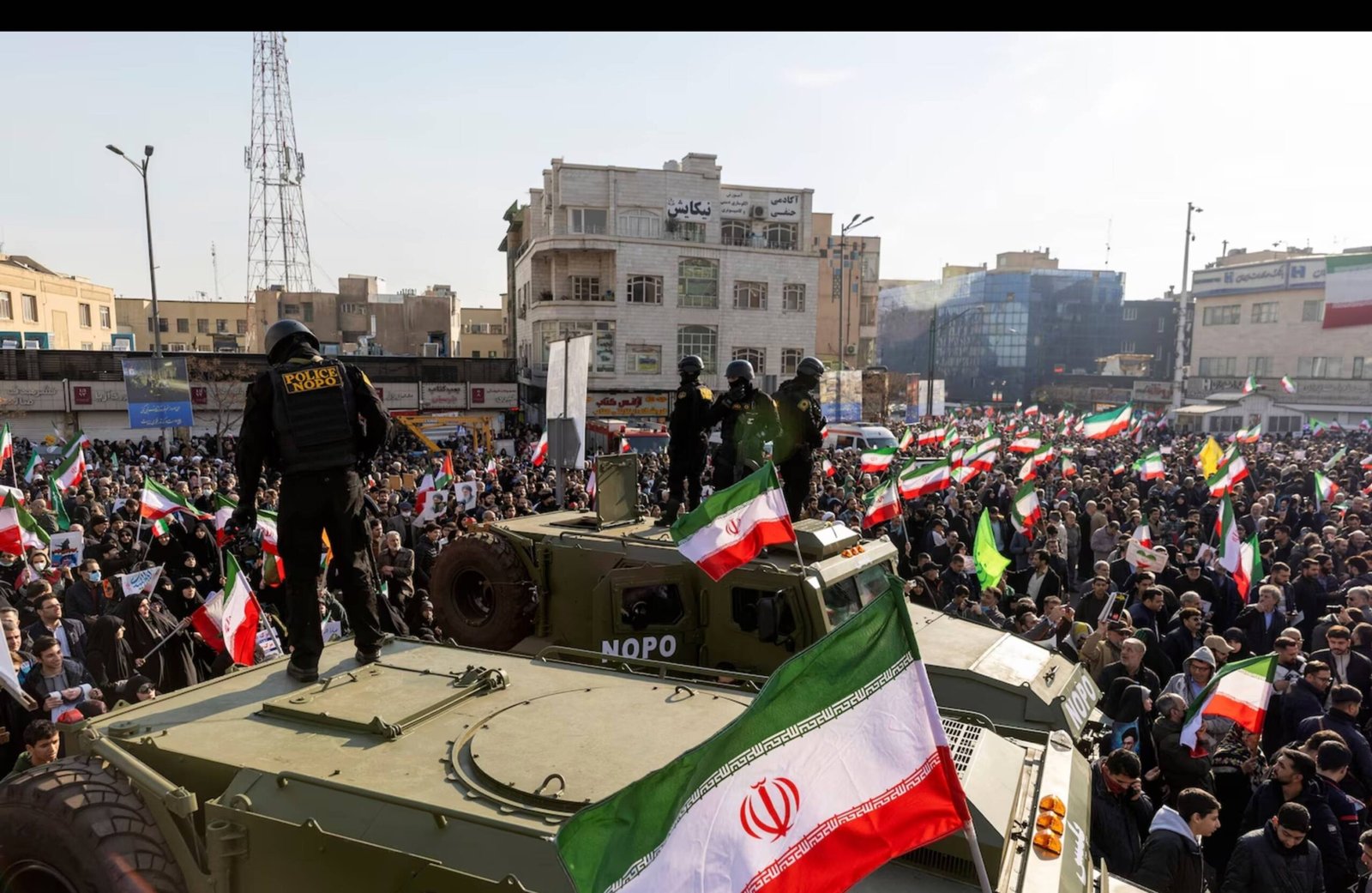
Since December 2025, Iran has been facing its most intense and widespread protests in years, triggering unrest that many observers believe could escalate into a full national crisis.
To understand the situation, it is important to look at what is happening on the ground and why this moment feels different from previous waves of dissent.
Nationwide protests began on December 28, 2025, starting in Tehran and quickly spreading to dozens of cities across all provinces. What began as demonstrations over soaring prices and economic collapse soon expanded into open opposition to Iran’s leadership.
The government responded with a severe crackdown. Security forces fired on demonstrators, with death toll estimates varying widely. Mass arrests followed, along with a near-total internet blackout aimed at restricting communication and limiting coverage. State television broadcast coerced confessions, a familiar tactic used to justify repression and frame dissent as criminal or driven by foreign agendas.
International reactions have included warnings from world leaders, threats of new sanctions, and growing speculation about foreign involvement, all of which have heightened the stakes of the crisis.
Why It’s Happening Now
The current unrest is not the result of a single event. It is the outcome of several deep-rooted crises converging at a breaking point.
Economic Collapse and Daily Hardship
Iran has been facing worsening economic conditions for years. The national currency has sharply devalued, inflation has surged, and basic necessities have become increasingly unaffordable. At the same time, public services have deteriorated, with water shortages, electricity instability, and failing infrastructure affecting daily life across the country.
Corruption and elite control over key industries have deepened resentment, particularly as wealth remains concentrated among those connected to the state and security apparatus. A recent banking crisis exposed structural weaknesses in the financial system and accelerated public anger. For many Iranians, the economy is no longer merely struggling. It has become proof that the system itself is broken and no longer serves ordinary people.
Long-Standing Political Repression
Since the 1979 revolution, Iran has been governed by an unelected theocratic authoritarian system. Ultimate power rests with the Supreme Leader and religious councils, while elections operate within strict and heavily controlled boundaries. Dissent is frequently met with surveillance, arrest, or violence.
This political reality means that economic protests quickly evolve into broader political demands. Previous movements, including the “Woman, Life, Freedom” uprising of 2022–2023, were eventually suppressed, reinforcing the belief that peaceful change is unlikely under the current system.
Decades of Unresolved Grievances
The anger driving today’s protests has been accumulating for decades. Many Iranians point to persistent political exclusion, enforced religious rules that intrude into daily life, and heavy-handed security responses as central sources of resentment. There is also a widespread sense that the state prioritizes ideology, power, and regional ambitions over the well-being of its own citizens.
Voices inside Iran stress that this moment is not a reaction to one policy or incident, but the result of a deeper rupture between society and the system governing it.
How This Protest Is Different
While Iran has experienced repeated uprisings, this moment stands out in several key ways.
Clearer Political Demands
In many cities, protesters are no longer calling only for economic relief. They are openly demanding systemic change and, in some cases, the removal of the current leadership altogether. Some demonstrators have invoked the name of Reza Pahlavi, the son of Iran’s last monarch, as a symbolic alternative or transitional figure.
This marks a shift from issue-based protests to a direct challenge to the legitimacy of the political system itself.
A Broader Social Base
Unlike past protests that were often centered on students, activists, or specific labor groups, today’s unrest cuts across society. Bazaar merchants, business owners, workers, students, middle-class families, and rural communities are all involved, making the movement more difficult to isolate or suppress.
The State’s Response
Iranian authorities have relied on familiar tactics to regain control. Large numbers of security forces have been deployed, lethal force has been used against demonstrators, and thousands have been arrested. The internet blackout has limited communication inside the country and slowed the flow of information abroad. State media continues to frame the unrest as the result of foreign interference rather than domestic grievance.
What Happens Next
Several scenarios now lie ahead. The government may succeed in suppressing the protests through force, repeating strategies used in previous unrest. A negotiated or mediated resolution could emerge, though historical examples of such compromises remain limited. The movement could also evolve into a prolonged struggle for political change, particularly if repression continues to radicalize broader segments of society. Regional and international involvement may further complicate the situation if foreign actors take a more direct role.
What is clear is that this moment will not pass quickly. The scale of the protests and the depth of their causes suggest that Iran’s political and social landscape is entering a period of serious uncertainty, one that could reshape the country well beyond the current crisis.