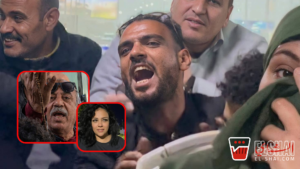
A recent viral video from Abbassiya shows a confrontation that illustrates a broader social issue: the fragile fast. In the footage, a young man stands on a Cairo sidewalk, smoking a cigarette during daylight hours during Ramadan. Another man approaches, clearly angered, and insists the smoker put the cigarette out: “You’re not fasting while we are.”
The situation escalates quickly. The self-appointed moral guardian hurls insults at the young man’s mother and accuses him of disbelief. The exchange concludes with a police report and prompts widespread online debate.
This incident goes beyond a single cigarette. It highlights how informal moral policing and public enforcement of religious practices are eroding personal boundaries, creating a contradiction between the true spirit of Ramadan and its enforcement in public spaces.
The Death of “Mind Your Own Business”
Egyptians often pride themselves on their sense of community, but there’s a thin line between community and intrusion. The Abbassiya sidewalk became a courtroom, with one citizen acting as prosecutor, judge, and jury. Instead of respecting privacy, we are witnessing a shift: public spaces are becoming arenas where everyone feels entitled to interrogate, correct, or shame others’ perceived transgressions. The principle of “mind your own business”—once a safeguard of urban life—is fading fast.
Religion as Public Surveillance
Ramadan is supposed to be a month of inner struggle—patience, humility, self-control. Yet incidents like this reveal how religious rituals are increasingly policed by public scrutiny rather than by personal conscience. Fasting becomes less about spiritual discipline and more about monitoring others. Who’s smoking? Who’s eating? Who’s not complying? The focus shifts from self-reflection to surveillance, and religion is wielded as a tool for social control instead of personal growth.
The “Moral Cop” Complex
The attacker in Abbassiya assumed everyone must be fasting, erasing the reality that many people have legitimate reasons not to: illness, medical conditions, travel, or simply holding different beliefs. Requiring strangers to “prove” themselves turns religion into an interrogation rather than a personal journey. It confuses unity with uniformity and forgets that piety cannot be enforced by public shaming.
Selective Morality
Here is the starkest contradiction. The man was angered by a cigarette but had no qualms about hurling insults and shaming. This is selective morality: fiercely defending visible rituals while disregarding the ethics they foster. Fasting is about respect, restraint, and dignity, not just abstaining from food, drink, or cigarettes. When these values are ignored, the ritual’s meaning fades.
Performative Piety
Such confrontations so often play out as public theater. The “sinner” becomes a prop, allowing the aggressor to display their own piety and moral superiority for an audience—online or offline. This performative religiosity is not about discipline; it is about spectacle. It’s about being seen to care, not about actually embodying the faith’s values.
The Fragile Fast
If seeing someone eat or smoke triggers anger or insults, what does that say about religious discipline? Ramadan is meant to build patience and control. If devotion ends at others’ noncompliance, the fast is fragile. True discipline means composure regardless of others’ actions.
The “Allahom Eny Sa2em” Syndrome
This pattern is not new. We’ve seen this contradiction before. Think of the men who catcall women in the street and then justify it with, “Allahom eny sa2em.” The ritual is acknowledged, but the ethical core is ignored. The same selective application of morality is at play: public displays of religious observance coupled with private disregard for its spirit.
Fasting Is Not a License to Police Others
Ramadan’s purpose is self-discipline, not deputizing every citizen as a moral cop. When religion becomes a justification for public confrontation, it ceases to be a spiritual practice and becomes social surveillance. Respect for others in public spaces is not optional. It is, in fact, the very discipline Ramadan is supposed to teach.