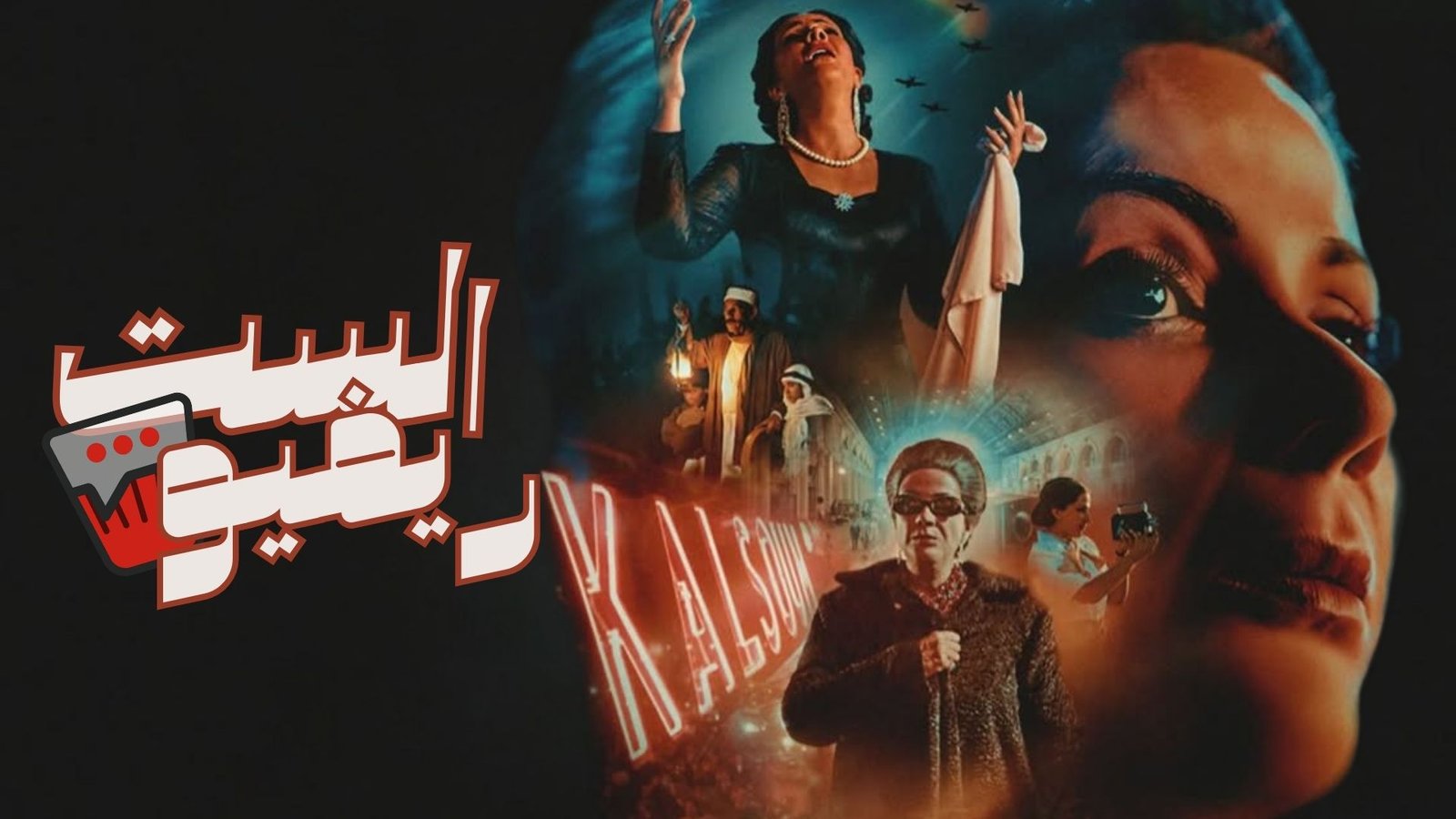
We’ve been waiting for El-Sett’s release for years now, and now that we’ve seen it, we have thoughts! For starters, El-Sett is not your typical musical biopic.
El-Sett is a cinematic impression — a bold, deeply resonant exploration of Umm Kulthum’s legacy, told through fragments of memory, artistry, and personal weight.
Rather than delivering a cradle-to-grave account, the film captures the essence of Souma’s mythic presence and how the enormous burden of cultural iconhood shaped her private and public journey.
From its opening frames, El-Sett projects confidence in its mission: not to imitate the icon, but to reinterpret her—through bold visuals, rich atmosphere, and a deeply felt central performance.
The storytelling flows like memory, not chronology, allowing the viewer to experience Umm Kulthum’s life in emotional waves rather than linear facts. Let us tell you, we have thoughts on that.
Now, before we even get to the review, we have to mention one thing. This film is NOT for those with photo sensitivity.
For some reason, Marwan Hamed decided that with each memory, we had to use extensive flash and intense lighting effects, which left most of us in actual pain after the film, even though we weren’t photosensitive.
With that out of the way, let’s start by analyzing the most important aspect of this film, Mona Zaki’s performance as Umm Kathoum.
Mona Zaki’s Performance: Presence Over Imitation
Mona Zaki delivers a performance that is all presence, posture, and emotional command. She avoids shallow impersonation, instead capturing Umm Kulthum’s gravity through gaze, rhythm, and restraint. Her interpretation becomes the emotional spine of the film — dignified, interior, and precise.
The physical resemblance is heightened by meticulous detail: the sunglasses, the costuming, the stillness.
Her lip-sync to Nesma Mahgoub’s vocals is not only technically strong but dramatically compelling. Even more affecting are the intimate glimpses — backstage tension, moments of quiet reading at home, or a sudden awakening in the middle of the night. These scenes humanize the legend without reducing her.
Zaki’s performance evolves across the film’s time shifts, handling the psychological and historical weight of each era with elegance and control. It’s a portrayal in service of vision, not vanity.
The Woman Behind the Voice
One of El-Sett’s most affecting qualities is its portrayal of Umm Kulthum as a woman, not just an icon. The film opens a window into her private world: her health struggles, daily routines, the weight of solitude, and flickers of vulnerability.
Romantic elements, depicted through characters played by Karim Abdelaziz, Sedky Sakhr, and Mohamed Farrag, don’t aim for biographical accuracy but emotional truth. These relationships are presented as impressions — shaping the psychological landscape more than the historical record.
For viewers unfamiliar with Umm Kulthum’s life, the film’s non-linear approach may feel disorienting at times. But each scene offers emotional clarity, and the atmospheric storytelling — built through sound design, lighting, and tempo — acts as a guide.
Cinematic Texture and Time
El-Sett’s visual language is key to its storytelling. Much of the film is presented in black and white — not as a nostalgic gimmick, but as a deliberate aesthetic. The vintage textures, static frames, and rich shadows evoke the grain of the past while grounding the viewer in each poignant beat.
Major historical elements — King Farouk’s court, the rise of Nasser, the British colonial presence — are naturally woven into the film. They inform Umm Kulthum’s world without overwhelming the narrative.
Set design by Mohamed Attia, costumes by Yasmin ElKady, Azza Fahmy’s jewelry, and Marwan Hamed’s elegant direction all reflect deep research and cinematic instinct. The result is a world that feels inhabited, not recreated.
Supporting Cast and Ensemble Power
The ensemble cast provides texture and balance. Amina Khalil, Amir El-Masry, Nelly Karim, and Ahmed Helmy all contribute to the emotional architecture surrounding Souma. Ahmed Radwan, as her nephew and assistant, offers moments of warmth and subtle humor, while Sayed Ragab brings gravitas as her father.
Even smaller roles — from Dona Emam to Jana El-Ashkar to Ali Sobhy — make a clear impact, reinforcing the world’s believability and human scale.
The Music as Emotional Core
At the heart of the film is the voice. Nesma Mahgoub’s striking vocal resemblance is more than mimicry — it’s soulful storytelling. The songs aren’t used as filler or performance beats; they are narrative events. You feel their power through silence, framing, and pacing.
Each musical sequence becomes a moment of communion — not just with the character, but with the audience’s own memory of her legacy. The film treats Umm Kulthum’s voice not as background, but as the protagonist.
Final Verdict?
El-Sett is a film that asks you to feel, not analyze. It is atmospheric, emotionally generous, and lovingly crafted. Imperfections exist — the flash-heavy visuals may be overused for some — but they never diminish the film’s achievement.
This is a cinematic portrait, not a historical lecture. It invites both reverence and intimacy, offering a bold reinterpretation of a woman who shaped a cultural era. In honoring Umm Kulthum’s mystery as much as her music, El-Sett does something rare: it makes the icon feel close, yet untouchable.
Rating: 9.5/10
Premiering in cinemas across Egypt and the Arab world on December 10.